T: +86-13302905061
E: sales@dongli2006.com
E: sales@dongli2006.com
Building 101, No.5 Rixing Street, Pingdong Community, Pingdi Street, Longgang District, Shenzhen, Guangdong, China.
Views: 0 Author: Site Editor Publish Time: 2026-06-05 Origin: Site


Choosing the right pneumatic screwdriver can make or break your assembly process. But what sets shut-off and clutch types apart?
Pneumatic screwdrivers vary in torque control and operation. Selecting the right type ensures precision and efficiency.
In this post, you’ll learn the key differences between shut-off and clutch pneumatic screwdrivers. We’ll explore their functions, uses, and benefits.
Table of Contents
Understanding Shut-Off Pneumatic Screwdrivers
Shut-off pneumatic screwdrivers automatically stop driving once they reach a preset torque. Inside, a precision clutch mechanism senses the torque level. When the target torque is hit, the clutch disengages, stopping the tool immediately. This prevents over-tightening and ensures consistent fastening. Operators don’t have to guess or rely on feel — the tool controls torque delivery precisely.

Shut-off screwdrivers shine in industries requiring high accuracy and repeatability. They’re ideal for assembling:
Machine screws in electronics
Thread-rolling screws in automotive parts
Thread-forming screws in plastics
These applications demand uniform torque to avoid damaging components or compromising joint strength. Shut-off tools reduce errors and increase product quality in such critical assembly lines.
Precise torque control: Tools shut off within a tight torque range, typically 10-20% variance.
Consistent results: Every screw receives the same torque, reducing defects.
Operator safety: Prevents overtightening that could cause tool kickback or part damage.
Reduced fatigue: Operators don’t need to apply extra force to feel torque limits.
Versatile configurations: Available in pistol grip, straight, and angle models to fit different workspace needs.
Manufacturers offer various shut-off pneumatic screwdriver models tailored for specific tasks:
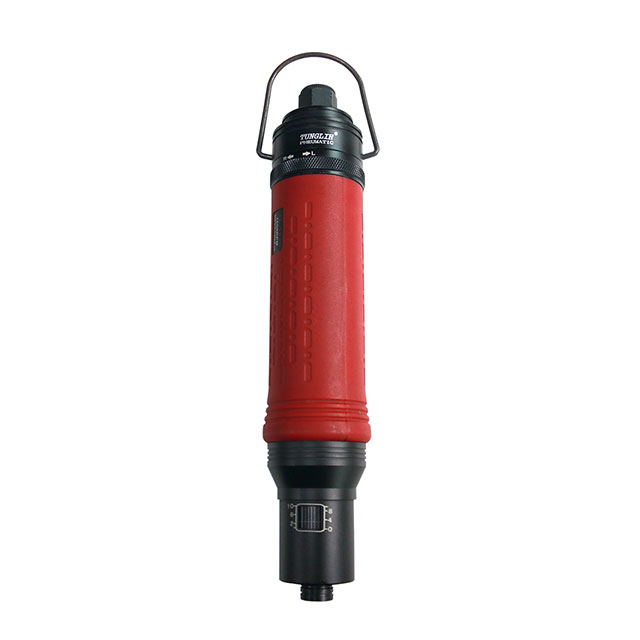
Pistol grip models: Compact and ergonomic, suitable for handheld use in tight spaces.
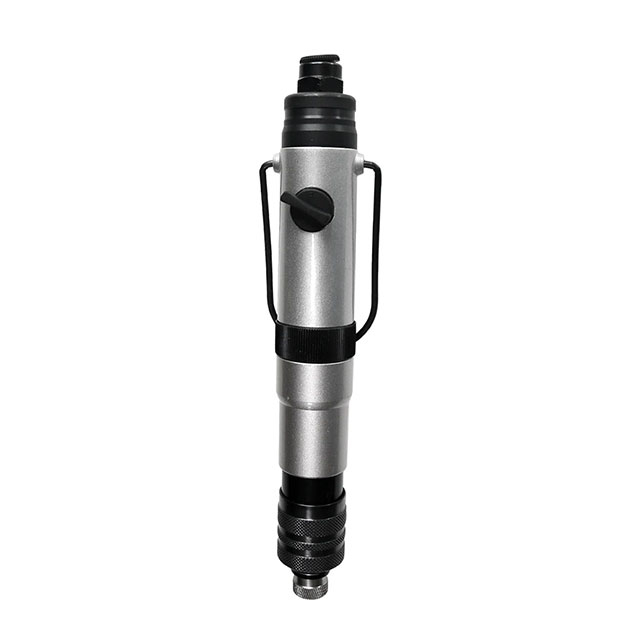
Straight models: Ideal for overhead or horizontal assembly lines where a direct approach is needed.
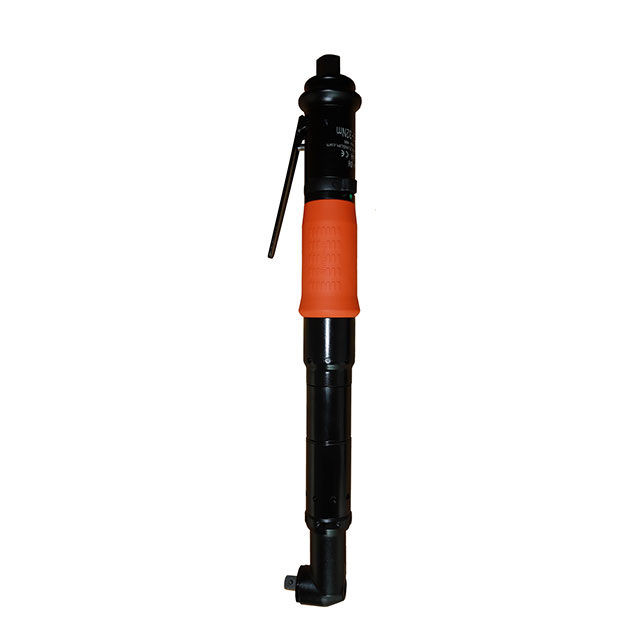
Angle models: Perfect for accessing hard-to-reach fasteners in confined areas.
An example is the LUM range, which provides durable, high-power shut-off screwdrivers in pistol grip and straight formats. The LTV series offers small angle shut-off tools featuring spiral cut angle gears for durability and accuracy.
Tip: When selecting shut-off pneumatic screwdrivers, always match the tool’s torque range to your application’s specifications to ensure optimal accuracy and prevent joint damage.
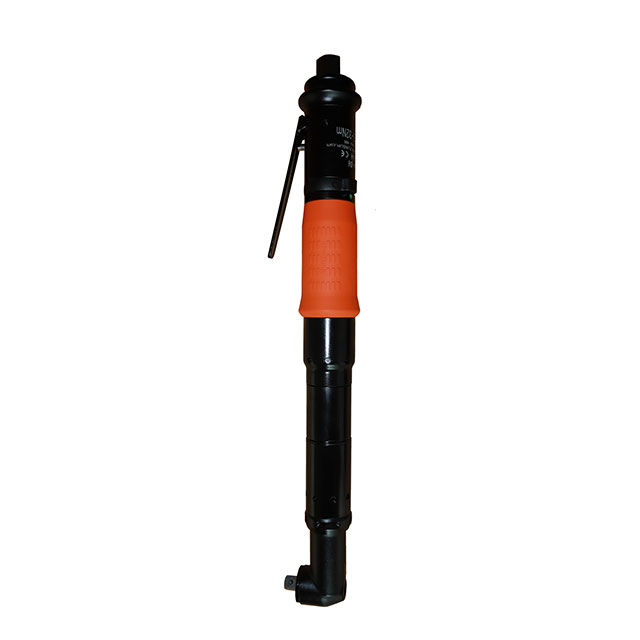
Clutch type pneumatic screwdrivers use mechanical clutches to control torque, allowing the tool to continue running even after reaching a preset torque level. The main clutch types include:
Slip-clutch (Cushion clutch): A spring-loaded clutch that slips or ratchets once the torque limit is reached. It produces a pulsating force, signaling the operator the torque target is met. Common in industrial-grade screwdrivers, it balances torque control and continuous rotation.
Positive jaw clutch: Features two opposing jaws that rotate together under pressure. When torque overcomes motor power, the jaws separate, stopping rotation. Operators can apply extra pressure to re-engage the clutch, squeezing additional torque. This clutch suits thread-cutting or self-tapping screws needing more driving torque than final torque.
Cushion clutch: Often used interchangeably with slip-clutch, it provides audible feedback during torque application. It is less precise than shut-off clutches but reliable for non-critical joints.
Clutch screwdrivers control torque by mechanically slipping or disengaging parts of the clutch once a preset torque is reached. Unlike shut-off types that stop immediately, clutch tools allow the motor to keep running, with the clutch slipping to prevent further torque increase. This design helps handle variations in torque during screw rundown, especially when torque temporarily spikes.
Torque control depends on clutch spring tension or jaw engagement force, often calibrated before production. Operators rely on tactile or audible feedback to know when to stop tightening.
Clutch screwdrivers excel in applications where torque variations occur during assembly or where some torque flexibility is acceptable. Typical uses include:
Driving sheet metal screws, self-tapping screws, and wood screws.
Assemblies where slight torque overshoot won't damage parts.
Situations requiring continuous rotation without tool shut-off.
Furniture manufacturing and sheet metal work involving thread cutting.
Medium torque applications where operator feel guides final tightening.
Their ability to handle torque spikes makes them suitable for joints with variable resistance or semi-hard materials.
Benefits:
Continuous rotation after torque limit reached, improving speed in some tasks.
Good for joints with variable torque requirements.
Audible or tactile feedback helps operators detect torque achievement.
Typically more forgiving in applications with torque fluctuations.
Limitations:
Less precise torque control than shut-off screwdrivers; torque variance can be wider.
Risk of overtightening if operator ignores feedback or applies extra pressure.
Not ideal for highly critical assemblies requiring exact torque repeatability.
Operator skill impacts consistency more than with shut-off types.
In summary, clutch type pneumatic screwdrivers offer flexible torque control suited for variable applications but trade some precision and automatic shut-off safety found in shut-off models.
Tip: Choose slip-clutch pneumatic screwdrivers for assemblies with torque spikes or self-tapping screws, but ensure operators are trained to recognize clutch feedback to avoid overtightening.
Direct drive, clutch, and shut-off pneumatic screwdrivers differ mainly in how they manage torque delivery.
Direct drive tools have no clutch. Torque depends solely on air pressure. When resistance exceeds motor power, the tool stalls. Operators control torque by adjusting air pressure and feel. This method lacks automatic torque limiting, so precision depends on operator skill.
Clutch type screwdrivers use mechanical clutches to limit torque. Once the preset torque is reached, the clutch slips or disengages partially, allowing the motor to keep running without increasing torque. Slip-clutch (cushion) types provide pulsating feedback, while positive jaw clutches stop rotation until extra force is applied. Torque control is semi-automatic but less precise than shut-off types.
Shut-off screwdrivers feature precision clutches that stop the tool immediately once the target torque is met. This prevents any further tightening and ensures consistent torque application across all fasteners. Torque repeatability is high, typically within 10-20% variance.
Tool design and torque control impact operator safety and comfort.
Direct drive screwdrivers can stall abruptly if torque spikes, potentially causing sudden tool reaction forces. Operators must be skilled to avoid overtightening or stripping screws. Ergonomics depend on tool shape and grip; pistol grip models provide good control in tight spaces.
Clutch type tools reduce sudden stalls by slipping, which lowers reaction forces and operator fatigue. Audible or tactile feedback helps operators know when torque is reached, enhancing safety. However, some clutch models require more operator attention to avoid overtightening.
Shut-off screwdrivers improve safety by automatically stopping, eliminating operator guesswork. This reduces fatigue and risk of repetitive strain injuries. Ergonomic models with pistol, straight, or angle grips further enhance comfort, especially in high-volume assembly.
Direct drive tools offer the least accuracy. Torque depends on air pressure and operator feel, which can vary widely. Repeatability is poor for critical assemblies.
Clutch type screwdrivers provide moderate accuracy. Torque is limited mechanically, but slipping clutches allow some variance. Repeatability depends on clutch calibration and operator skill.
Shut-off tools deliver the highest accuracy and repeatability. They consistently apply preset torque and stop instantly, ensuring uniform fastening quality in critical applications.
Direct drive screwdrivers have fewer moving parts, leading to simpler maintenance and higher durability. Lack of clutch reduces wear points.
Clutch type tools have mechanical clutches that require periodic calibration and inspection. Clutch components may wear over time, affecting torque control accuracy.
Shut-off screwdrivers contain precision clutches and sensors, which need regular maintenance to maintain accuracy. They may be more sensitive to contamination and wear but offer long-term reliability if properly cared for.
Tip: Choose shut-off pneumatic screwdrivers for applications demanding precise, repeatable torque and operator safety; use clutch types when some torque flexibility and feedback are acceptable; select direct drive for simple, non-critical joints where operator skill can manage torque.

Choosing the right pneumatic screwdriver starts with understanding your application’s torque needs. Torque is the twisting force to drive screws properly. Pick a tool whose torque range comfortably covers your target torque — ideally placing your torque near the middle of the tool’s range. Avoid tools where your torque is near the high or low limits, as this reduces accuracy and repeatability.
Speed matters, too. Lower torque tools spin faster, while higher torque models run slower. If you work with soft materials like plastic or wood, slower speeds help prevent stripping. For metal-on-metal joints, faster tools speed up production without damage.
Shape affects operator comfort and accessibility. Pistol grip screwdrivers fit well when fasteners face horizontally or are easy to reach. Inline (straight) models suit overhead or vertical assembly where the part lies flat. Angle screwdrivers help reach confined spaces or awkward angles. Match the tool shape to the workspace to reduce operator fatigue and improve precision.
Different screw types and materials call for specific screwdriver types:
Direct drive models work best for self-drilling and wood screws where torque specs are flexible. Operators adjust air pressure to control torque by feel.
Slip-clutch screwdrivers handle sheet metal, wood, and self-tapping screws well. Their clutch slips when torque peaks, allowing continuous rotation and handling torque spikes.
Shut-off screwdrivers shine with machine screws, thread-rolling screws, and thread-forming screws in plastics. They deliver precise torque and stop instantly to avoid overtightening.
Matching the screwdriver clutch type to the screw and material ensures consistent joint quality and avoids damage.
Ergonomics matter for high-volume assembly. Choose tools with balanced weight and comfortable grips to reduce strain. Pistol grip models often provide natural wrist positions for horizontal work, while inline tools minimize bending when working overhead or on flat surfaces.
Using torque arms or tool balancers can reduce operator fatigue by supporting tool weight and absorbing reaction torque. This helps maintain consistent torque application and prevents repetitive strain injuries.
Direct drive pistol grip tools suit construction or woodworking where self-drilling screws are common.
Slip-clutch pistol and straight models fit sheet metal fabrication, appliance assembly, and furniture manufacturing.
Shut-off pistol, straight, and angle screwdrivers excel in electronics, automotive assembly, and medical device production requiring precise torque control.
Tip: Always select a pneumatic screwdriver whose torque range centers on your target torque and whose shape fits your workspace to maximize accuracy and operator comfort.
Precision shut-off clutches are designed for high accuracy and repeatability. They automatically stop the screwdriver once the preset torque is reached, preventing overtightening and ensuring consistent fastening quality. These clutches are pre-calibrated before production and are not typically adjusted by operators on the line.
They deliver torque repeatability within about 10-20% of the target value, making them ideal for critical assemblies. You’ll find precision shut-off clutches in electronics, automotive components, medical devices, and some wood applications like musical instruments or speakers.
Because the tool stops instantly at the target torque, it reduces operator fatigue and the risk of damage to delicate parts. Shut-off clutch tools come in various configurations, including pistol grip, straight, and angle models, to fit different workspaces.
Slip-clutch, also known as cushion or ratcheting clutch, works by slipping or ratcheting once the desired torque is reached. It produces a pulsating or ratcheting sound and tactile feedback to signal the operator.
Unlike precision shut-off clutches, slip-clutch tools continue to run, allowing continuous rotation while limiting torque. This makes them suitable for applications where torque spikes occur during screw rundown.
Slip-clutch screwdrivers are common in general manufacturing, toy assembly, appliances, power tools, and lawn equipment. They handle hard or semi-hard joints well but are less precise than shut-off clutches.
Operators need training to recognize clutch feedback and avoid overtightening. These clutches are often found in pistol grip or straight models and are popular for sheet metal screws, self-tapping screws, and wood screws.
Positive jaw clutches use two opposing jaws that rotate together during normal operation. When torque exceeds the motor’s power, the jaws separate, stopping rotation. Operators can apply extra pressure to re-engage the clutch and squeeze more torque.
This clutch type suits thread-cutting or self-tapping screws requiring more driving torque than final torque. It offers good control but depends heavily on operator skill to avoid overtightening.
Positive jaw clutches are common in furniture manufacturing and sheet metal work. They usually come in higher torque ranges and require experienced operators for best results.
Direct drive screwdrivers have no clutch. The motor shaft couples directly to the output, and torque control depends entirely on air pressure. When torque exceeds motor power, the tool stalls.
These tools are compact, lightweight, and rugged with fewer parts to maintain. They work well for soft materials like wood or self-drilling screws where precise torque control is less critical.
Direct drive tools rely on operator feel and skill to prevent overtightening. They are best for non-critical joints or applications without strict torque specs.
Tip: Match clutch type to your application’s torque precision needs and operator skill level—choose precision shut-off for critical joints, slip-clutch for variable torque jobs, positive jaw for thread-cutting screws, and direct drive for simple, soft-material fastening.
Proper training is key to getting the most from shut-off and clutch pneumatic screwdrivers. Operators should understand how each tool signals torque achievement—whether through automatic shut-off or clutch slipping feedback. For shut-off screwdrivers, training focuses on recognizing that the tool stops automatically at the correct torque, so no extra force is needed. For clutch types, operators must learn to feel or hear the clutch slip and stop applying torque promptly to avoid overtightening.
Hands-on practice with calibrated tools helps operators develop muscle memory and confidence. Regular refresher sessions reinforce best practices and reduce errors. Also, training should cover tool handling techniques to maintain consistent pressure and alignment during screw driving, which improves torque accuracy and reduces wear.
Overtightening and stripping screws are common issues that damage parts and slow production. Shut-off screwdrivers help prevent overtightening by stopping at preset torque, but operators must avoid forcing the tool after shut-off. For clutch types, overtightening risk is higher since the tool keeps running with clutch slip. Operators need to heed tactile or audible clutch feedback and stop tightening immediately.
Stripping often occurs when torque is too high for the screw or material, or when the bit is worn or mismatched. Use the correct bit size and type for each screw, and replace bits regularly. Select a screwdriver with a torque range appropriate for the application, avoiding tools that operate near torque limits.
Regular maintenance keeps pneumatic screwdrivers accurate and reliable. For shut-off tools, clean air supply filters frequently to prevent contamination that can affect clutch performance. Inspect and lubricate moving parts per manufacturer guidelines. Periodic torque calibration ensures tools remain within specified accuracy.
Clutch screwdrivers require clutch inspection and adjustment or replacement as clutch components wear. Check for unusual noises or slipping that feels inconsistent. Replace worn clutch springs or jaws promptly to maintain torque control.
Also, keep external surfaces clean and store tools properly to prevent damage. Using quality lubricants and following service intervals extends tool life and reduces downtime.
Torque arms and other ergonomic accessories help reduce operator fatigue and improve safety. These devices absorb reaction torque generated when driving screws, preventing wrist strain and repetitive stress injuries.
Torque arms mount to the workstation or tool and support the screwdriver’s weight and forces. They allow operators to maintain steady pressure and alignment without overexertion. This improves torque consistency and reduces errors.
Other helpful accessories include tool balancers, adjustable handles, and vibration dampeners. Investing in ergonomic solutions pays off in higher productivity and fewer workplace injuries.
Tip: Train operators to recognize shut-off stops or clutch slip signals and maintain proper tool handling to avoid overtightening and extend tool life.
Shut-off pneumatic screwdrivers offer precise torque control by stopping automatically, ensuring consistent fastening and operator safety. Clutch types provide flexible torque with tactile feedback, suitable for variable applications but less precise. Selecting the right tool depends on the specific torque needs, screw types, and work environment. For critical assemblies, shut-off models are recommended, while clutch tools suit less sensitive tasks. Dongli Industrial Equipment (Shenzhen) Co., Ltd. delivers high-quality pneumatic screwdrivers that enhance productivity and reliability in industrial assembly.
A: Shut-off screwdrivers automatically stop at a preset torque for precise control, while clutch types use mechanical clutches that slip or disengage, allowing continuous rotation with less precision.
A: Shut-off types improve safety by stopping instantly to prevent overtightening; clutch types provide feedback but rely on operator skill to avoid errors.
A: Shut-off tools excel in critical assemblies requiring exact torque, while clutch types suit variable torque jobs like sheet metal or self-tapping screws.
A: Shut-off screwdrivers need regular calibration and clean air supply; clutch types require clutch inspection and adjustment due to wear.
A: Shut-off screwdrivers are typically more expensive due to precision features, while clutch types offer a cost-effective solution for less critical torque control.