T: +86-13302905061
E: sales@dongli2006.com
E: sales@dongli2006.com
Building 101, No.5 Rixing Street, Pingdong Community, Pingdi Street, Longgang District, Shenzhen, Guangdong, China.
Views: 0 Author: Site Editor Publish Time: 2025-10-23 Origin: Site


Have you ever stripped a screw or over-tightened it? An Electric Screwdrivers ensures precise torque every time. In this article, you will learn why torque matters. We explore selection, calibration, and best practices. Mastering torque improves safety, quality, and efficiency.
Torque is the rotational force applied to a fastener to hold components together. It directly affects clamping force, joint integrity, and assembly stability. Over-tightened screws can strip threads, while under-tightened ones may loosen over time. By controlling torque, an Electric Screwdriver ensures consistent assembly, even across high-volume production lines.
Incorrect torque can cause significant problems. Over-torquing may break screws, damage threads, or deform materials. Under-torquing risks loose components, poor electrical connections, or structural instability. These issues are especially critical in aerospace, automotive, and electronics, where even minor deviations can compromise safety.
In electronics, precise torque ensures circuit board components remain secure. Automotive applications rely on accurate torque to prevent mechanical failures. Aerospace assemblies demand exact clamping force to meet strict safety standards. Across these industries, torque precision is not optional—it is mandatory for operational success.
Every fastener has an elastic range and a yield point. Tightening within the elastic region ensures screws hold without deformation. Exceeding the yield point leads to plastic deformation and potential failure. Understanding how torque affects screw properties allows technicians to maintain reliability across assemblies.
Most electric screwdrivers incorporate a mechanical clutch to limit torque. When the preset torque is reached, the clutch disengages, preventing further tightening. This method ensures repeatable torque application and reduces operator error. Mechanical clutches are simple, reliable, and effective in fast-paced assembly.
Advanced electric screwdrivers include sensors and transducers that measure torque in real time. These devices provide feedback to operators and store data for traceability. Digital systems improve assembly consistency and allow for detailed quality control analysis.
Adjustable torque allows operators to set the tool for specific materials and fasteners. For softer materials, torque can be reduced to prevent damage. For harder components, torque can be increased to ensure secure fastening. This flexibility is essential in applications where different materials are used within the same assembly.
Ergonomic design reduces operator fatigue during repetitive tasks. Comfortable grips, balanced weight, and intuitive controls allow consistent torque application. By minimizing human error, electric screwdrivers improve product quality and reduce the likelihood of fastener failure.
Corded models provide continuous power and stable torque output, ideal for stationary assembly lines. Cordless tools offer mobility, making them suitable for on-site or remote tasks. Selection depends on workflow, assembly location, and operational requirements.
Choose a screwdriver with a torque range matching the fasteners used. Small electronics may require 4–15 Nm, while medium machinery fasteners need 15–35 Nm. Higher torque tools handle heavy-duty applications efficiently without risking under-tightening.
Tool RPM influences torque application and assembly speed. High-speed electric screwdrivers complete repetitive tasks faster while maintaining precision. A balance between speed and control is essential to avoid stripping screws or damaging materials.
Consider industry-specific needs, fastener types, and assembly scale. Precision electronics require fine torque control, while automotive production favors higher torque with repeatability. Proper tool selection ensures each application is handled with accuracy.
Feature | Corded Electric Screwdriver | Cordless Electric Screwdriver |
Power Supply | Continuous | Battery-powered |
Mobility | Limited | High |
Torque Consistency | Very stable | Slightly variable |
Ideal Use | Factory assembly lines | On-site installations |
Regular calibration is critical to ensure an electric screwdriver consistently delivers the torque it claims. Over time, repeated use can cause drift in torque accuracy, leading to over-tightened or under-tightened fasteners. Such deviations compromise assembly quality, reduce joint integrity, and increase the risk of component damage or product failure. Implementing a strict calibration schedule helps maintain both reliability and safety across all production environments, especially in industries where precision is non-negotiable.
Calibration frequency should be determined by usage intensity, cycle count, and manufacturer recommendations. Standard practice often suggests annual calibration, every 5,000 cycles, or after any significant drop or mechanical shock. Adhering to these intervals ensures the screwdriver continues to perform within its specified torque range. Proactive calibration prevents costly rework, minimizes downtime, and maintains consistency in high-volume production environments, ultimately enhancing overall operational efficiency.
Signs of torque inaccuracy include inconsistent torque readings, unusual resistance, or visible damage to screws and fasteners. Addressing these issues may require recalibration, clutch mechanism adjustments, or sensor inspections. Detecting problems early prevents repeated errors, reduces material waste, and maintains the quality of assemblies. Regular diagnostic checks also allow operators to identify trends in tool performance, helping managers plan maintenance proactively and avoid unexpected assembly disruptions.
Maintaining an electric screwdriver involves routine cleaning, lubrication, and inspection of all moving parts. Ensuring bits remain sharp, handles intact, and the tool is free of debris preserves torque accuracy. Additionally, periodic checks of internal electronics and clutch mechanisms extend the tool’s lifespan. Well-maintained screwdrivers operate more efficiently, reduce operator fatigue, and maintain assembly precision, contributing to higher productivity and fewer rejected products over time.
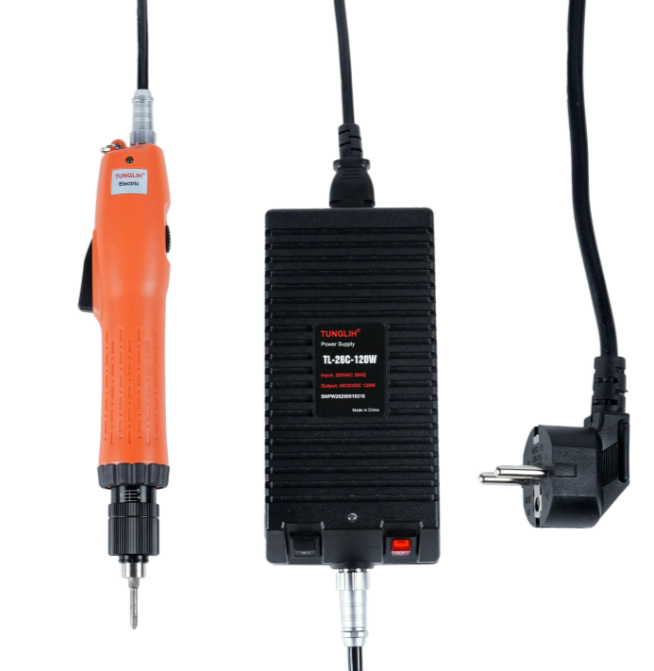
Transducer-equipped electric screwdrivers measure torque electronically, providing exceptional accuracy and repeatability. These tools send real-time data to a controller, allowing precise monitoring of each fastener. Such systems reduce the risk of over- or under-tightening, ensuring every connection meets exact specifications. They are particularly valuable in industries requiring high traceability, such as aerospace, medical devices, and electronics, where even minor torque deviations can compromise safety or performance.
Some advanced electric screwdrivers offer programmable sequences for torque, angle, speed, and rotation. This feature is crucial for complex assemblies with multiple fasteners requiring consistent application. Programmable sequences eliminate operator variability and enhance process efficiency. They allow operators to maintain uniform quality across all units, while also saving time on repetitive tasks and ensuring each fastener meets predefined torque standards.
Modern screwdrivers can log torque values in real time, providing comprehensive traceability for quality control. Data recording allows managers to track trends, verify compliance with standards, and generate reports for audits. This capability supports both operational efficiency and accountability in regulated industries. Traceable torque data also facilitates continuous improvement initiatives by identifying areas where processes or tool usage may be optimized.
Advanced electric screwdrivers include features such as automatic clutch disengagement, torque alerts, and overload protection. These enhancements prevent fastener failure, material damage, and reduce the risk of operator error. By combining precision control with safety mechanisms, these tools improve reliability, increase operator confidence, and ensure consistent assembly outcomes even in high-pressure or critical applications.
Applying excessive torque can strip threads, break screws, and stress materials. Over-torquing usually occurs when operators ignore torque settings or fail to adjust for specific material types. Such mistakes compromise assembly integrity, reduce product lifespan, and may even create safety hazards. Training and adherence to proper torque guidelines help prevent these costly errors, ensuring components are fastened safely and consistently.
Insufficient torque leads to loose fasteners, weakened joints, and potential product failure. Under-tightened screws can compromise structural integrity, cause intermittent electrical connections, or result in warranty claims. Monitoring torque output, using torque-controlled electric screwdrivers, and following recommended settings mitigate these risks. Proper technique and attention to detail ensure reliable assemblies across all production runs.
Incorrect torque settings reduce assembly quality and can damage both fasteners and materials. Operators must understand electric screwdriver torque control to select the appropriate setting for each application. Adjusting torque for material hardness, fastener size, and joint requirements prevents defects. Consistent adherence to settings ensures repeatable performance, protecting both product quality and operational efficiency.
Skipping calibration results in gradual loss of torque accuracy, leading to cumulative errors in assembly. Tools that are not calibrated consistently may produce variability between units, reduce product reliability, and increase scrap rates. Following a rigorous maintenance and calibration schedule preserves long-term tool performance, guarantees precision, and safeguards against costly failures in critical applications.
Always refer to manufacturer guidelines for fasteners and materials when setting torque. Using torque charts and verifying tool settings before assembly ensures screws are tightened correctly. Proper torque prevents material deformation, ensures joint strength, and enhances product durability. Establishing clear standards for torque application reduces variability and maintains consistent assembly quality across all units.
Effective training ensures personnel understand correct torque application, tool handling, and safety practices. Consistent instruction reduces variability, improves precision, and minimizes assembly errors. Hands-on practice combined with clear guidance on torque settings builds operator confidence and promotes repeatable, high-quality fastening across multiple production cycles.
Leverage feedback from torque-controlled tools to monitor assembly quality continuously. Real-time data, audits, and verification protocols help identify deviations early. Integrating quality control measures with tool monitoring allows for rapid corrective actions, maintaining high standards and minimizing the risk of defective products reaching customers.
Routine inspections, lubrication, and sensor verification ensure reliable operation. Maintaining bits, handles, and internal mechanisms extends tool life and keeps torque consistent. Proper upkeep reduces downtime, increases productivity, and safeguards assembly precision, ensuring the electric screwdriver performs optimally throughout its service life.
Understanding torque in Electric Screwdrivers ensures precision and safety in assembly. Proper torque prevents fastener damage and enhances product quality. Regular calibration and correct use deliver consistent, reliable results. Dongli Industrial Equipment (Shenzhen) Co., Ltd. provides advanced electric screwdrivers that improve efficiency and traceability, offering real value to manufacturers.
A: Torque in an Electric Screwdriver is the rotational force applied to a fastener. Proper electric screwdriver torque control ensures screws are tightened accurately without damaging components.
A: The importance of torque in screwdrivers lies in preventing over-tightening or under-tightening, which can cause stripped threads, loose assemblies, or safety issues in critical applications.
A: How torque affects electric screwdrivers includes joint integrity, fastener longevity, and consistent assembly quality. Correct torque prevents component damage and ensures repeatable results.
A: Choosing electric screwdriver torque settings requires matching the torque to fastener type, material, and application. Adjustable torque settings improve precision and protect sensitive parts.
A: Yes, with proper electric screwdriver torque control, the tool limits torque output, reducing the risk of stripped threads, broken screws, or damaged materials.
A: Torque calibration should follow manufacturer guidance, typically annually or after heavy usage, to maintain precision and prevent miscalibration issues in electric screwdrivers.
A: Electric Screwdrivers offer consistent torque, programmable settings, and faster operation, making them superior to manual tools for tasks requiring precise torque control.
A: Common mistakes include ignoring calibration, misadjusting torque settings, and over- or under-tightening fasteners. Proper training ensures consistent torque application.
A: Routine cleaning, lubrication, inspection, and sensor checks help maintain electric screwdriver torque control and ensure reliable, accurate performance over time.