T: +86-13302905061
E: sales@dongli2006.com
E: sales@dongli2006.com
Building 101, No.5 Rixing Street, Pingdong Community, Pingdi Street, Longgang District, Shenzhen, Guangdong, China.
Views: 0 Author: Site Editor Publish Time: 2026-11-09 Origin: Site


Industrial tool ergonomics focuses on reducing unnecessary physical strain during repeated manufacturing operations. Tool weight, grip design, working posture, vibration, trigger operation, and torque reaction all influence operator comfort.
For assembly lines using electric and pneumatic screwdrivers, an ergonomic tool configuration can help reduce fatigue while supporting stable and efficient fastening.
Table of Contents

Industrial operators may perform the same fastening operation hundreds or thousands of times during a shift.
Even relatively lightweight tools can become tiring when used repeatedly or held in awkward positions.
Repeated gripping, pressing, and repositioning can increase physical demands on the hands, wrists, arms, and shoulders.
The risk depends on the combined effects of force, repetition, posture, and recovery time.
Holding a tool in one position for extended periods requires sustained muscular effort.
Overhead fastening or work performed with extended arms may increase these demands.
Supporting tool weight can reduce the effort required to maintain the working position.
Powered screwdrivers can produce a reaction force or moment during tightening.
At higher torque levels, the operator may need to resist this movement.
Appropriate tool design and reaction support can reduce the amount of force transferred to the operator.
The OSHA guidance on using power tools highlights the importance of neutral wrist posture, appropriate handles, tool support, and torque-control devices.
Tool weight influences the effort required to hold and move equipment.
However, total weight is not the only consideration.
The distribution of weight affects how the tool feels during operation.
A well-balanced tool may be easier to control than one with an awkward center of gravity.
The handle should support a secure grip without requiring excessive force.
Grip diameter, surface texture, and shape should suit the user and task.
A handle that is too large or too small may increase grip effort.
The angle between the tool and the fastener influences wrist and arm posture.
Inline tools may be useful for certain downward fastening operations.
Pistol-grip tools may provide better wrist alignment for some horizontal applications.
Neither design is universally superior.
Repeated trigger activation can place demands on the fingers and hand.
Lever-start, push-start, and other mechanisms create different operating movements.
The appropriate mechanism depends on how the tool is positioned and how frequently it is activated.
Vibration and reaction torque can affect control and physical workload.
Manufacturers should consider actual exposure rather than assuming that a lightweight tool automatically produces minimal strain.
Factor | Potential Problem | Ergonomic Improvement |
|---|---|---|
Excessive Tool Weight | Shoulder and arm fatigue | Use tool support or lighter suitable equipment |
Poor Grip Size | Increased hand effort | Match handle design to the operator |
Awkward Wrist Angle | Wrist and forearm strain | Adjust tool orientation and fixture position |
High Reaction Torque | Increased holding force | Use an appropriate reaction arm |
Repetitive Trigger Use | Finger fatigue | Evaluate suitable start mechanisms |
Excessive Reaching | Shoulder loading | Position work within a comfortable reach |
Hose Resistance | Restricted movement | Improve hose routing and support |
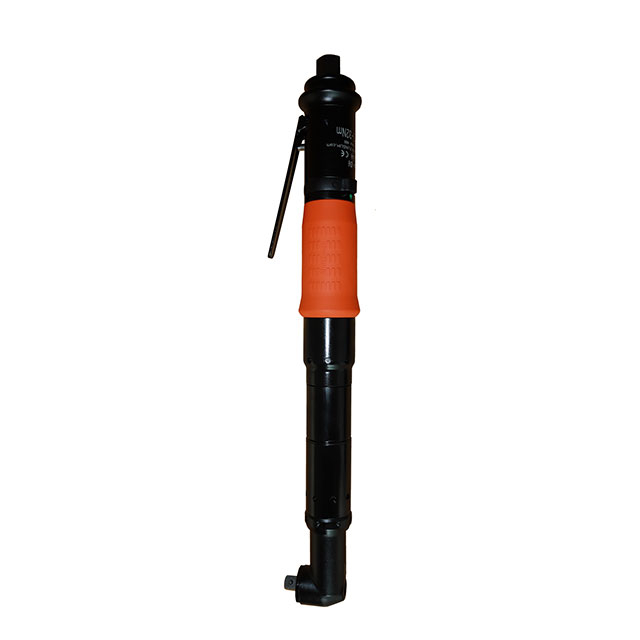
Inline screwdrivers provide a straight tool configuration.
They can support axial alignment in many vertically oriented assembly tasks.
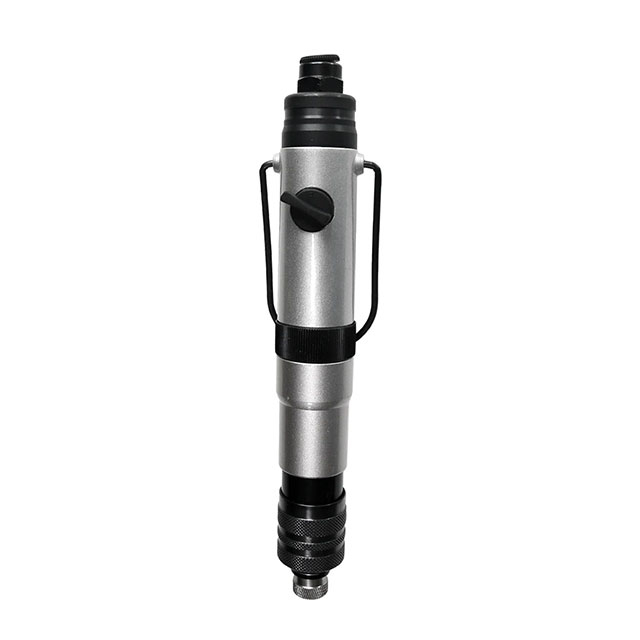
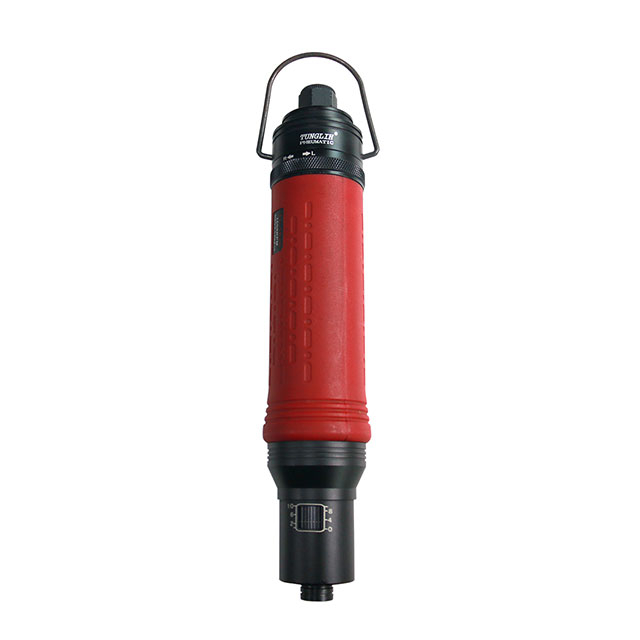
TUNGLIH offers inline pneumatic screwdrivers for different fastening requirements.
Pistol-grip tools allow the operator to hold the tool at an angle to the driving axis.
This configuration may help maintain a neutral wrist position during some horizontal fastening tasks.
The workstation height and actual fastening direction determine whether the design is appropriate.
Electric tools may provide various grip designs, start mechanisms, and adjustable torque settings.
TUNGLIH's industrial electric screwdriver range includes inline, pistol-grip, brushless, and precision options.
The most suitable design should be confirmed through workstation trials.
Tool-support accessories can be particularly useful where operators perform frequent fastening operations.
A balance arm or tool support can carry part of the tool's weight.
This reduces the force required to hold the tool throughout the working period.
Suitable reaction arms can absorb or redirect tightening reaction forces.
This may reduce the need for operators to resist torque manually.
The support must be rated for the tool and expected loading.
A correctly configured support can guide tool movement and improve positioning consistency.
However, an incorrectly installed arm may restrict access or introduce awkward movement.
TUNGLIH provides a balance auxiliary arm category for industrial screwdriver applications.
Its published description emphasizes vibration absorption, reaction-force management, and reduced operator effort.
Any specific performance improvement should be evaluated under the user's actual working conditions.
The workstation should allow operators to work without prolonged shoulder elevation or excessive bending.
Height-adjustable fixtures may help accommodate different operators and products.
Parts should be positioned to minimize unnecessary reaching and awkward tool angles.
Fixture design can make a significant difference in repetitive fastening work.
Poorly routed hoses and cables may restrict movement or create tripping hazards.
Suspension systems and suitable routing can help keep the workstation organized.
Heavier tools and high-torque applications may benefit from balancers, support arms, and reaction devices.
An ergonomic assessment should include picking up the tool, positioning the bit, tightening the screw, and moving to the next fastening location.
Improving one movement may not be sufficient if other parts of the task remain demanding.
The NIOSH Practical Demonstrations of Ergonomic Principles provides guidance on hand-tool selection, grip design, and neutral posture.
Electronics assembly often involves small components and repeated precision fastening.
Tool balance, grip design, and controlled activation can be particularly important.
Automotive component assembly may involve varied fastening directions and higher torque requirements.
Appropriate reaction-force management and positioning support can reduce physical demands.
Appliance assembly often requires repeated fastening across panels, frames, and internal components.
Tool supports and workstation fixtures can help reduce unnecessary handling movements.
TUNGLIH supplies industrial electric and pneumatic screwdrivers with different handle configurations and fastening mechanisms.
Its product range also includes auxiliary arms intended to support screwdriver operation in repetitive assembly applications.
Manufacturers can evaluate different tool and accessory combinations according to fastening direction, torque level, workstation height, and operator requirements.
It is the design and arrangement of tools and tasks to reduce unnecessary physical strain during work.
No. Grip design, balance, posture, and reaction forces also influence usability.
A correctly selected and installed reaction arm can reduce the force operators must resist during tightening.
The answer depends on fastening direction, workstation height, and the operator's working posture.
Industrial tool ergonomics helps manufacturers address the physical demands of repetitive assembly.
Appropriate tool design, neutral working posture, reaction support, and workstation planning can improve operator comfort and support consistent operation.
TUNGLIH provides industrial screwdrivers and auxiliary tool solutions for different manufacturing workstation requirements.