T: +86-13302905061
E: sales@dongli2006.com
E: sales@dongli2006.com
Building 101, No.5 Rixing Street, Pingdong Community, Pingdi Street, Longgang District, Shenzhen, Guangdong, China.
Views: 0 Author: Site Editor Publish Time: 2026-11-09 Origin: Site


Industrial pneumatic tool air consumption affects factory operating costs by determining how much compressed air is required during production. Higher air demand can increase compressor loading, electricity use, and pressure losses when the system is not properly designed.
For facilities operating multiple pneumatic screwdrivers, understanding air consumption helps engineers evaluate tool efficiency and compressed-air system requirements.
Table of Contents

Air consumption describes the quantity of compressed air required by a pneumatic tool during operation.
Manufacturers may express consumption in liters per minute (L/min), cubic feet per minute (CFM), or other units under specified reference conditions.
Operating pressure and air consumption describe different characteristics.
Pressure influences the conditions under which the air motor operates.
Air consumption describes the quantity of air required.
A tool with a higher operating pressure does not necessarily consume more air than another tool under all conditions.
Both values must be considered.
Pneumatic screwdrivers generally consume air while operating.
When a tool is idle, normal air consumption should be much lower, although leaks or specific control designs may still create demand.
For production planning, the tool's actual running time is important.
Factories must supply sufficient compressed air to all operating tools.
If demand exceeds available capacity, pressure can fall.
This may affect tool speed, performance, and production consistency.
Excessive demand also increases operating costs and may require additional compressor capacity.
Calculating average demand helps engineers understand factory air requirements.
However, the units and measurement basis must be consistent.
Obtain the manufacturer's air consumption specification.
The published value should identify the operating pressure and whether the measurement represents free-air delivery, standard air volume, or another basis.
Do not compare values expressed under different reference conditions without conversion.
Measure how long the tool runs during each production cycle.
A tool may operate for only a fraction of the total assembly time.
For a tool with a specified running air consumption, average demand can be estimated as:

This simplified calculation assumes a consistent operating flow and excludes leaks or other standby consumption.
Suppose an industrial pneumatic screwdriver consumes 200 L/min while operating.
If it runs for 25% of the observation period:

The estimated average air demand is 50 L/min.
This is an illustrative calculation, not a TUNGLIH product specification.
A factory may operate several pneumatic screwdrivers at the same time.
Total demand depends on the number of tools, individual consumption, and operating overlap.
For multiple tools:

Where each tool's operating consumption is multiplied by its estimated duty fraction.
For example:
Parameter | Value |
|---|---|
Number of Tools | 10 |
Operating Consumption per Tool | 200 L/min |
Average Duty Fraction | 25% |
Estimated Total Average Demand | 500 L/min |
The estimated demand is 500 L/min.
However, compressor sizing cannot rely solely on average demand.
Several tools may operate simultaneously during busy production periods.
The compressed-air system must accommodate the resulting peak demand and pressure requirements.
Air receivers and suitable controls may help manage short-term variations, but their sizing must be determined from the system design.
Pressure losses can occur through:
Undersized hoses
Long distribution lines
Restrictive fittings
Dirty filters
Inadequate regulators
Excessive simultaneous demand
Engineers should measure pressure under actual operating conditions.
Generating compressed air requires electrical energy.
The amount depends on compressor efficiency, operating pressure, controls, demand profile, and system losses.
The U.S. Department of Energy's compressed-air guidance identifies air leaks, excessive pressure, and inefficient controls as important improvement opportunities.
Air leaks increase demand without contributing to production.
They may occur in hoses, couplings, valves, and fittings.
Regular inspection and repair can help reduce unnecessary energy consumption.
Operating a compressed-air system at unnecessarily high pressure may increase energy use.
The correct setting should satisfy tool requirements while avoiding excessive supply pressure.
Poorly maintained filters, hoses, fittings, and pneumatic tools can reduce system efficiency.
Maintenance costs should be considered together with energy costs.
A pneumatic screwdriver should match the torque and speed requirements of the application.
Tool selection based only on maximum output may lead to unnecessary capacity or unsuitable operation.
TUNGLIH provides industrial pneumatic screwdrivers for different fastening applications.
Suitable pressure regulation helps tools operate within their specified conditions.
Pressure should be checked at the workstation during actual operation.
Efficient workstations can reduce the amount of time a tool runs without productive fastening.
Suitable shut-off mechanisms can stop driving after the configured tightening condition is reached.
Explore TUNGLIH's shut-off pneumatic screwdriver range for applicable fastening requirements.
Inspection and maintenance should include compressed-air leaks, filtration, regulators, and system controls.
The DOE's Improving Compressed Air System Performance sourcebook provides detailed guidance on system assessment, pressure management, and energy efficiency.
Actual pneumatic tool operating costs should be calculated from measured compressor energy use whenever possible.
A simplified annual electricity cost estimate is:

Assume the compressed-air equipment has an average electrical demand of 5 kW during 2,000 annual operating hours.
At an illustrative electricity price of $0.15/kWh:

The estimated annual electricity cost is $1,500.
This example represents total electrical input under the stated assumptions. It does not isolate the cost of one pneumatic screwdriver.
To allocate energy cost to a specific workstation, a factory should measure the relevant air demand and compressor energy profile.
Cost Component | Calculation Consideration |
|---|---|
Compressor Electricity | Measured power and operating hours |
Tool Air Demand | Rated and measured consumption |
Air Leakage | Unproductive air demand |
Maintenance | Filters, fittings, seals, spare parts |
Downtime | Production interruptions |
Equipment Investment | Compressor, distribution system, tools |
A complete assessment should consider both direct energy costs and production reliability.
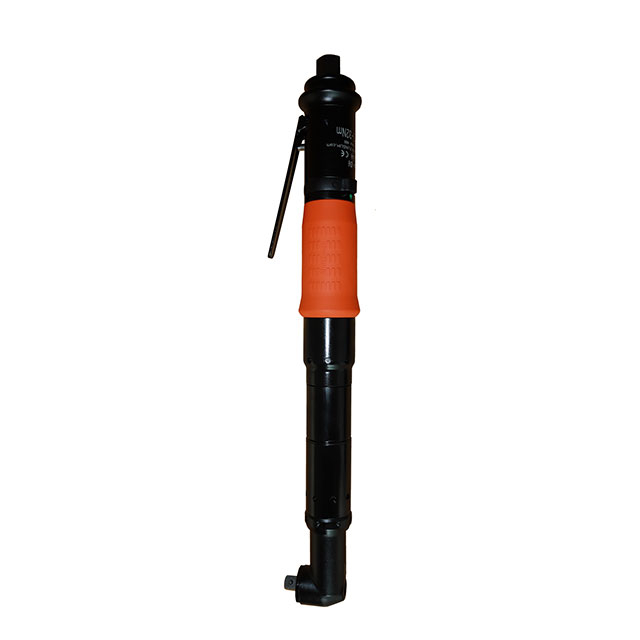
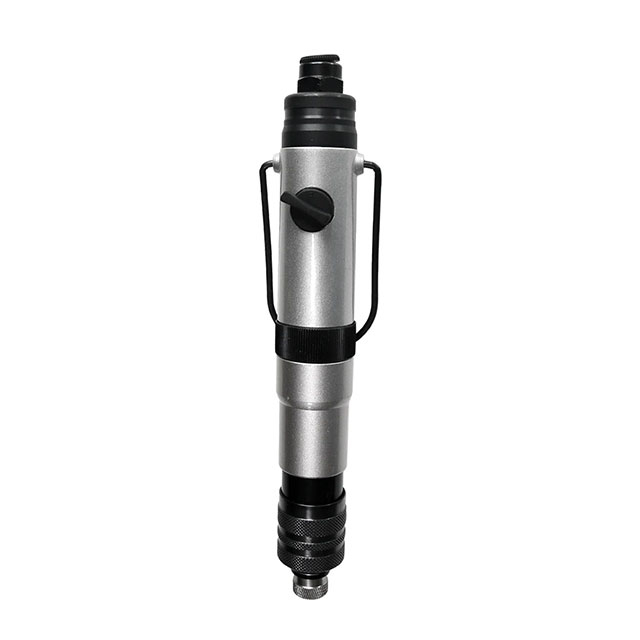
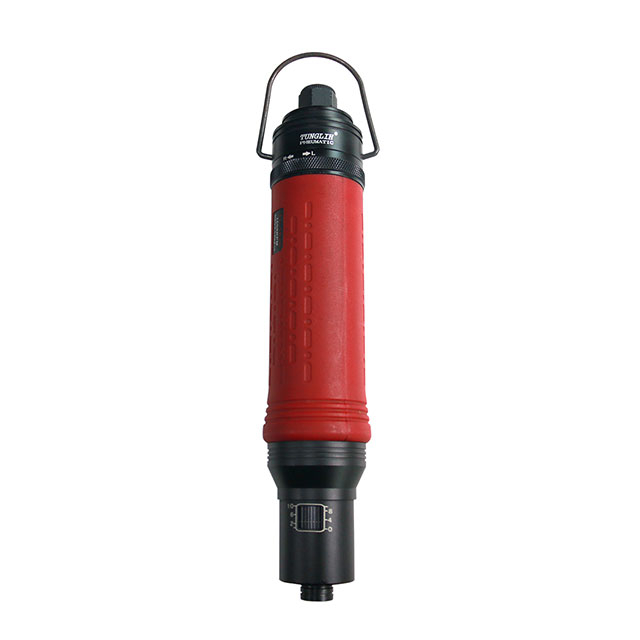
TUNGLIH offers pneumatic screwdrivers with different torque capacities, start mechanisms, and tool configurations.
The range includes inline, pistol-grip, clutch-type, and shut-off models.
For manufacturing facilities evaluating compressed-air demand, tool performance should be reviewed alongside the existing compressor and distribution system.
The TUNGLIH inline pneumatic screwdriver range provides options for different repetitive fastening operations.
For technical evaluation, buyers should provide the required torque, production cycle time, available air pressure, expected operating hours, and number of workstations.
It is typically expressed as a volume flow rate under defined pressure and reference conditions.
Not necessarily. Overall costs depend on tool operating time, compressor efficiency, production output, and system losses.
Reducing unnecessary pressure can reduce system energy use, provided the tools still operate within their required specifications.
Factories can inspect leaks, optimize operating pressure, maintain equipment, and select suitable pneumatic tools.
Industrial pneumatic tool air consumption is an important factor in evaluating factory operating costs.
Accurate demand calculations, stable pressure, efficient compressor operation, and appropriate maintenance can improve overall system efficiency.
TUNGLIH provides industrial pneumatic screwdriver configurations for manufacturing applications with different torque, workflow, and air supply requirements.