T: +86-13302905061
E: sales@dongli2006.com
E: sales@dongli2006.com
Building 101, No.5 Rixing Street, Pingdong Community, Pingdi Street, Longgang District, Shenzhen, Guangdong, China.
Views: 0 Author: Site Editor Publish Time: 2026-03-24 Origin: Site


Why do factories still rely on Pneumatic Screwdriver systems today? Speed and consistency matter in every assembly line. This article explores Pneumatic Screwdriver applications in industrial manufacturing. You will learn how it improves efficiency, quality, and tool selection.
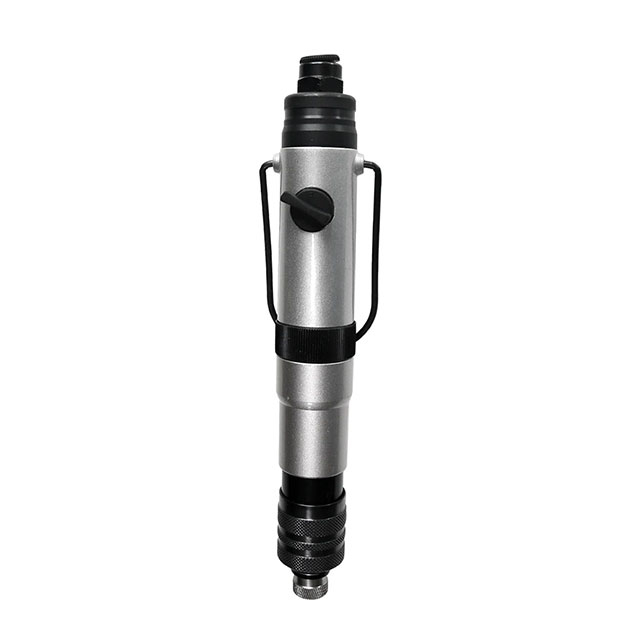
A Pneumatic Screwdriver is a fastening tool powered by compressed air. It converts air pressure into rotational force, then drives screws with stable torque output. In factory settings, it works as a core tool for repetitive fastening tasks. Operators rely on it for speed, consistency, and long-hour operation without overheating or battery limits.
From a working principle view, it connects to an air compressor through a hose. Air flows into the internal motor. The motor spins the output shaft. This creates controlled torque for screw installation. Because it uses air instead of electricity, it often feels lighter in continuous use. That helps reduce fatigue in high-volume assembly environments.
Compared to other screwdriver types, the differences are practical and easy to see:
| Feature | Pneumatic Screwdriver | Electric Screwdriver | Manual Screwdriver |
|---|---|---|---|
| Power Source | Compressed air | Electricity or battery | Human force |
| Duty Cycle | Continuous operation | Limited by heat or battery | Limited by user |
| Torque Stability | Very consistent | Moderate | Low |
| Best Use Case | Assembly lines | Flexible tasks | Occasional use |
In industrial manufacturing, different workstation layouts require different tool designs. A single Pneumatic Screwdriver type cannot fit all applications. That is why factories use multiple configurations to match access, torque, and operator comfort needs.
Let’s break down the main types used on assembly lines:
Straight Pneumatic Screwdriver It is designed for vertical or inline fastening tasks. It works best on fixed benches or automated stations. Operators can apply direct downward force. This improves control when installing screws in flat surfaces or panels.
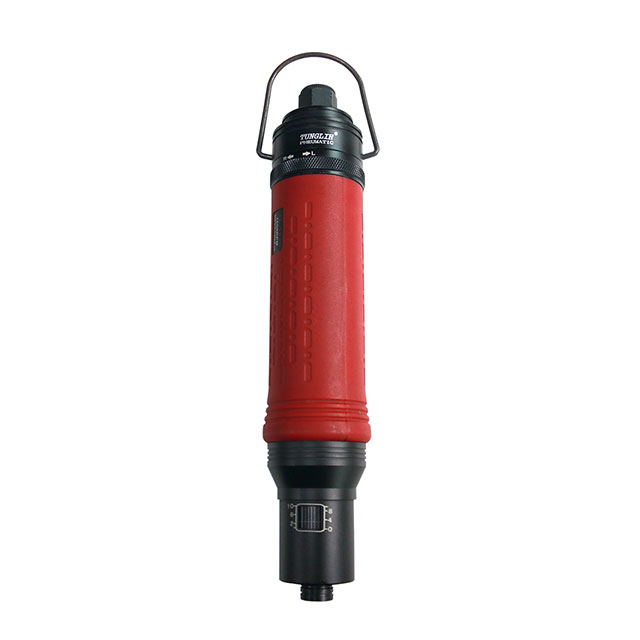
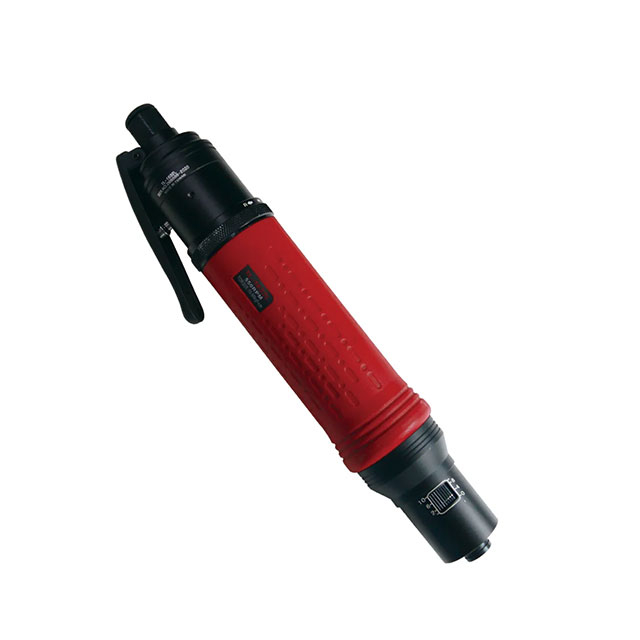
Pistol Grip Pneumatic Screwdriver It offers a more natural hand position. The grip angle reduces wrist strain during long operations. It is commonly used for medium to large fasteners. It also works well when operators need flexibility and mobility on the line.
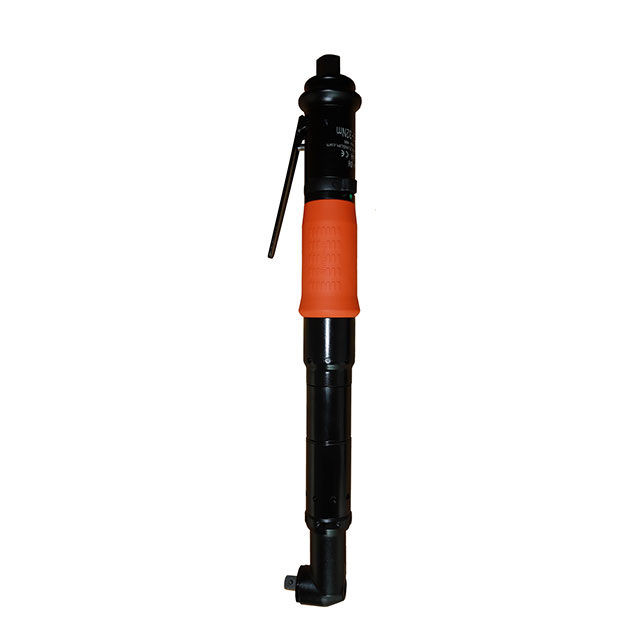
Angle Head Pneumatic Screwdriver It is built for tight or restricted spaces. The head sits at a 90-degree angle. This allows access where straight tools cannot reach. It is widely used in machinery assembly and compact product designs.
Adjustable Torque and Shut-Off Pneumatic Screwdriver These tools provide higher precision. They stop automatically when reaching a preset torque. This prevents over-tightening. It also ensures consistent fastening quality across every unit produced.
In electronics production, a Pneumatic Screwdriver handles small screws and delicate parts every minute. We often see it on PCB assembly lines, device housing stations, and small appliance production. It delivers stable torque, which helps protect fragile components. This matters when screws are tiny and materials are sensitive.
In these environments, precision is not optional. It directly affects product quality and rejection rate. Operators use pneumatic tools because they respond quickly and maintain consistent output across long cycles. That improves workflow rhythm and reduces human error during repetitive fastening.
Key usage features in light assembly lines include:
Small fastener handling It works well for micro screws and precision fittings. It avoids damage to plastic housings or circuit boards. It keeps fastening uniform across large batches.
Controlled torque for delicate components It allows fine adjustment of torque levels. This prevents cracking, stripping, or over-tightening. It also ensures consistent assembly standards.
Fast cycle time in repetitive workstations It supports high-speed assembly tasks. It reduces time per unit. It keeps production lines moving without interruption.
In automotive and machinery production, fastening tasks become heavier and more repetitive. A Pneumatic Screwdriver fits well in sub-assembly stations. It helps install brackets, panels, and internal components. It keeps torque consistent across thousands of units.
Operators in these environments need tools that can handle both speed and durability. Pneumatic tools deliver steady power during long shifts. They also reduce variation between operators. This helps maintain product quality across different production batches.
Common use scenarios include:
Repetitive fastening in sub-assemblies It handles repeated screw installation tasks. It reduces variation between cycles. It improves overall assembly consistency.
Better control during component installation It offers stable torque output. It helps align parts correctly during fastening. It reduces the chance of loose or over-tightened joints.
Use in high-speed, high-load stations It performs well in demanding environments. It supports continuous operation without overheating. It matches the needs of heavy-duty assembly lines.
These advantages make pneumatic screwdrivers a reliable choice in production areas where both precision and strength are required.
Continuous production lines require tools that can run without interruption. A Pneumatic Screwdriver is well suited for this. It uses compressed air instead of batteries. That removes charging delays and power drop issues.
Factories often run multiple shifts. Tools must stay stable across long hours. Pneumatic screwdrivers maintain consistent performance. They do not lose torque over time. This helps keep product quality stable from start to end.
Here is how they support continuous manufacturing:
Reduced downtime There is no need to stop for charging. It keeps the line moving. It improves overall equipment efficiency.
Stable long-shift performance It maintains torque consistency over extended use. It avoids overheating issues common in electric tools. It supports reliable production output.
Compatibility with fixed workstations It integrates easily into assembly setups. It works with suspended systems or fixed mounts. It fits both manual and semi-automatic stations.
| Production Factor | Pneumatic Screwdriver Impact |
|---|---|
| Downtime | Lower due to no charging |
| Consistency | High across long shifts |
| Integration | Easy with air systems |
| Reliability | Stable under continuous use |
Different assembly stations require different tool shapes. A single Pneumatic Screwdriver type cannot handle every task. Choosing the right configuration improves both efficiency and operator comfort.
Each design serves a specific purpose:
Straight Pneumatic Screwdriver It is ideal for vertical and bench work. It allows direct pressure during fastening. It improves control in fixed workstations.
Pistol Grip Pneumatic Screwdriver It provides better ergonomics. It reduces wrist strain during long tasks. It works well for larger screws and flexible positions.
Angle Head Pneumatic Screwdriver It fits into tight or narrow spaces. It allows access where straight tools cannot reach. It is useful in complex assemblies.
A Pneumatic Screwdriver plays a direct role in improving production speed. In assembly lines, time per unit matters. Even small delays can affect total output. Pneumatic tools respond instantly. They deliver stable speed across every cycle. This helps operators maintain a smooth working rhythm.
In repetitive fastening tasks, consistency is critical. Workers often repeat the same motion hundreds of times. A pneumatic tool reduces variation. It supports steady hand movement. It also keeps torque output uniform. This allows the line to run without interruption.
Efficiency gains can be seen in several ways:
Faster fastening cycles It completes screw installation quickly. It reduces idle time between operations. It helps meet strict takt time requirements in production lines.
Better operator rhythm It allows continuous motion during repetitive work. It reduces stop-and-go actions. It improves overall workflow smoothness.
Higher production throughput It supports more units per hour. It reduces bottlenecks in fastening stations. It improves line balance across multiple workstations.
| Efficiency Factor | Without Pneumatic Screwdriver | With Pneumatic Screwdriver |
|---|---|---|
| Cycle Time | Slower, inconsistent | Faster, stable |
| Operator Flow | Interrupted rhythm | Smooth workflow |
| Output Rate | Lower throughput | Higher production volume |
Fastening quality depends on torque control. A Pneumatic Screwdriver delivers consistent torque across repeated operations. This reduces variation between units. It ensures each screw is tightened to the correct level. This is especially important in precision manufacturing.
Incorrect torque leads to problems. Under-tightening can cause loose parts. Over-tightening can damage threads or materials. Pneumatic tools help avoid these issues. They provide predictable performance in every cycle.
Here is how they improve quality:
Consistent torque delivery It keeps torque output stable. It reduces variation between operators. It ensures uniform assembly results.
Lower risk of fastening errors It minimizes under-tightening. It prevents over-tightening damage. It improves product reliability.
Reduced rework and defects It lowers rejection rates. It reduces time spent on corrections. It improves overall production efficiency.
Operator comfort affects productivity. In long shifts, fatigue can reduce performance. A Pneumatic Screwdriver helps improve working conditions. It offers a lighter handling feel compared to many alternatives. It also reduces strain during repetitive motion.
Comfort is not only about weight. It also includes grip, balance, and vibration. Pneumatic tools are designed for continuous use. They support better control during fastening tasks. This helps operators maintain accuracy even after many hours of work.
Key comfort benefits include:
Lightweight working feel It reduces physical load on the user. It allows longer operation without discomfort. It supports high-frequency tasks.
Easier handling during long shifts It improves grip and control. It reduces wrist strain. It allows more natural working posture.
Reduced fatigue in repetitive operations It minimizes repetitive stress. It supports stable performance over time. It helps maintain consistent work quality.
Choosing a Pneumatic Screwdriver starts from understanding the core technical parameters. In real assembly lines, the wrong specification leads to unstable torque, slow work pace, or tool wear. We should match the tool performance to the production requirement, not just pick a general model.
The most critical factors are easy to identify, but they must be evaluated together. Each one affects the final performance on the line.
Torque range It defines how much force the tool can deliver. If it is too low, screws may stay loose. If it is too high, it may damage threads or materials. We should always choose a torque range slightly above the actual requirement. This improves durability and stability.
Speed (RPM) It controls how fast the screw is driven. High speed improves cycle time. But excessive speed may reduce control in precision tasks. We need a balance between speed and accuracy.
Screw size capacity It determines what size of fasteners the tool can handle. Small electronics require low torque and fine control. Industrial equipment needs higher torque and stronger output. Matching screw size avoids inefficiency.
Air pressure and air consumption Pneumatic tools depend on air supply. If pressure is unstable, performance drops. If air consumption is too high, it affects system efficiency. We must ensure the air system supports the tool continuously.
Selecting the right Pneumatic Screwdriver is not only about specifications. It also depends on how and where the tool will be used. Different assembly environments require different tool structures and configurations.
We can look at it from three key dimensions:
Precision assembly vs general industrial fastening Precision assembly needs tight torque control. It often uses adjustable or shut-off pneumatic screwdrivers. General industrial fastening focuses more on durability and speed. It may use standard models with wider torque ranges.
High-volume line work vs flexible workbench use In high-volume production, tools must run continuously. They should support consistent output and low maintenance. In flexible workstations, operators need more mobility. Pistol grip designs often work better in these situations.
Tight-space access vs open workstation access In compact assemblies, space is limited. Angle head tools provide better access. In open workstations, straight tools allow direct force and better control. Choosing the right structure improves both efficiency and comfort.
Pneumatic Screwdriver improves speed and control in assembly lines. It delivers stable torque and reduces errors during repetitive work. It supports continuous production and better operator comfort. Dongli offers reliable pneumatic screwdrivers with precise torque and flexible options. They help manufacturers increase efficiency and maintain consistent product quality.
A: Pneumatic Screwdriver is used for fast and consistent fastening in assembly lines.
A: Pneumatic Screwdriver improves efficiency, reduces errors, and supports continuous work.
A: Choose Pneumatic Screwdriver based on torque, speed, and application needs.
A: Pneumatic Screwdriver is used in electronics, automotive, and machinery assembly.
A: Pneumatic Screwdriver offers stable performance and longer continuous operation.