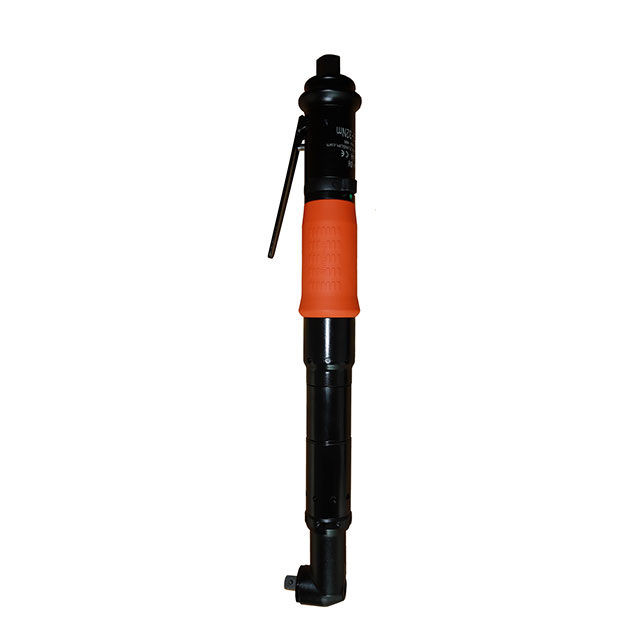
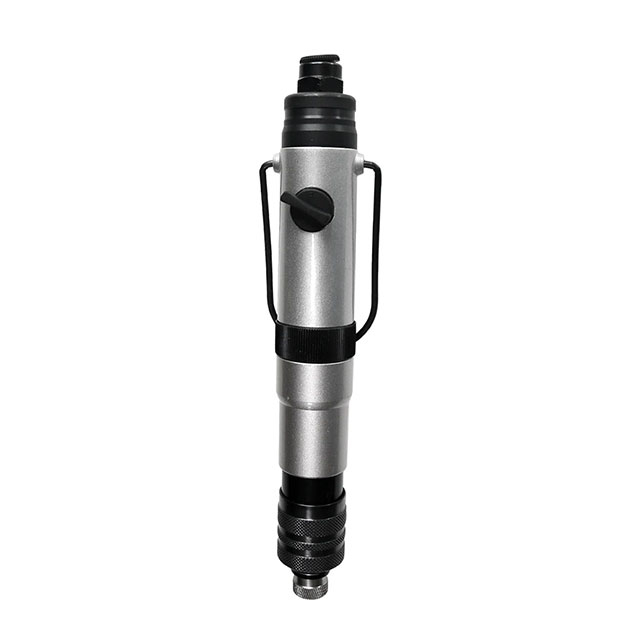
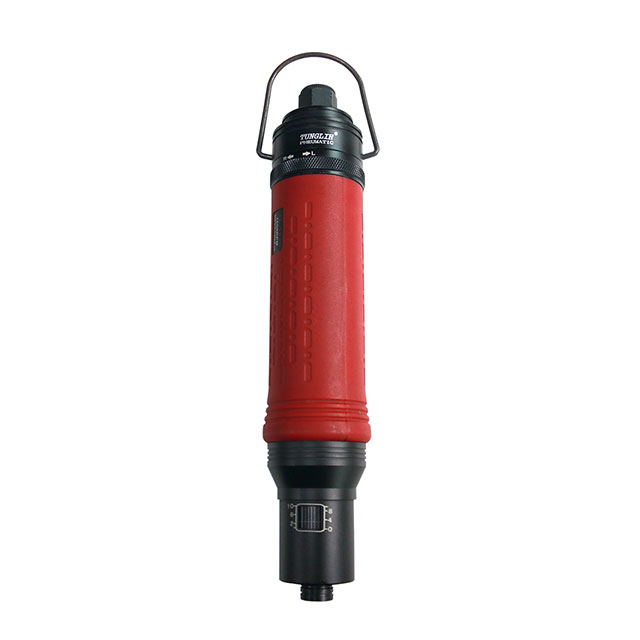
English 
T: +86-13302905061
E: sales@dongli2006.com
E: sales@dongli2006.com
Building 101, No.5 Rixing Street, Pingdong Community, Pingdi Street, Longgang District, Shenzhen, Guangdong, China.
Views: 0 Author: Site Editor Publish Time: 2026-03-24 Origin: Site


Are you confident your pneumatic screwdriver delivers the right torque every time? Incorrect torque can cause costly assembly errors.
Torque control is crucial in precision applications to ensure secure, damage-free fastening. Pneumatic screwdrivers play a key role in efficient assembly processes.
In this post, you’ll learn why torque matters, how pneumatic screwdrivers work, and how to overcome common torque control challenges.
Torque in pneumatic screwdrivers is the twisting force applied to fasteners, usually measured in inch-pounds (in-lb) or newton-meters (N·m). This measurement reflects the tool’s ability to tighten screws to a precise clamping force. Accurate torque measurement ensures components are securely fastened without damage. Pneumatic screwdriver torque specifications often include a torque range, indicating the minimum and maximum torque the tool can reliably deliver. For precision applications, it’s essential to select a tool with a torque range that centers around the target torque value to maintain consistency and avoid over- or under-tightening.
Adjusting pneumatic screwdriver torque settings requires care to achieve precise control:
Identify the Required Torque: Refer to the assembly specifications or torque guide for your application.
Release the Adjusting Ring or Collar: This unlocks the torque adjustment mechanism.
Turn the Torque Adjustment Handle or Ring: Align the scale markings to the desired torque value. For example, setting 24 in-lb involves aligning the scale ring appropriately.
Lock the Adjusting Ring: This secures the setting and prevents accidental changes.
Test the Setting: Use a torque tester or gauge to verify the tool applies the correct torque.
Fine-Tune if Needed: Make small adjustments based on test results to maintain accuracy.
Several factors influence torque precision in pneumatic screwdrivers:
Air Pressure Stability: Variations in compressed air pressure can alter torque output. Maintaining consistent air pressure is critical for repeatability.
Tool Wear: Worn internal components, such as clutches or springs, can reduce torque accuracy.
Bit Fit and Condition: Using the correct bit size and ensuring it’s in good condition prevents slippage and inaccurate torque application.
Operator Technique: Consistent handling and application angle help maintain torque control.
Environmental Conditions: Temperature and humidity can affect tool performance and air pressure consistency.
The pneumatic screwdriver torque range defines the span between the lowest and highest torque the tool can deliver. Selecting a tool with a torque range centered on your target torque improves precision. For example, if your target torque is 30 in-lb, a tool with a 10–50 in-lb range is ideal. Avoid tools where your target torque is near the upper or lower limit, as this reduces control and repeatability. Inline pneumatic screwdriver torque tools often offer adjustable ranges to accommodate various applications.
Regular pneumatic torque screwdriver calibration ensures ongoing precision:
Frequency: Calibrate at least every six months or after any tool drop or repair.
Calibration Tools: Use certified torque testers or torque analyzers compatible with pneumatic tools.
Process: Adjust the tool to a specific torque setting, then verify output with the tester. Adjust internal settings as needed.
Professional vs. In-House: Calibration can be performed by qualified technicians or in-house if proper equipment and training exist.
Documentation: Keep records of calibration dates and results for quality control and compliance.
Safety is paramount when adjusting torque settings:
Always wear ANSI-approved safety goggles.
Do not use the pneumatic screwdriver for loosening fasteners.
Avoid exceeding the rated torque range to prevent tool damage.
Ensure the tool is not damaged or dropped before use; have it tested if it has been dropped.
Use bits rated for the torque applied.
Lock torque settings firmly before operation to avoid accidental changes.
Common problems and solutions include:
Inconsistent Torque Output: Check air pressure stability and tool wear.
Torque Too High or Low: Recalibrate the tool and verify the torque adjustment scale.
Tool Does Not Shut Off at Set Torque: Inspect the clutch mechanism and springs for wear.
Bits Slipping or Damaging Fasteners: Ensure correct bit size and condition.
Unexpected Tool Shutdowns: Verify air supply and check for internal obstructions.
Maintaining precise pneumatic screwdriver torque adjustment is key to quality assembly and safety.
Tip: Regularly verify your pneumatic screwdriver’s torque settings with a certified torque tester to ensure consistent precision and avoid costly assembly errors.
When selecting a pneumatic screwdriver for precision applications, understanding the clutch type is crucial. The clutch controls how torque is transmitted and limited, directly impacting torque accuracy and repeatability. Here’s a detailed look at the most common clutch types and their implications for torque control:
The precision shut-off clutch is the gold standard for pneumatic screwdriver torque settings in critical assembly tasks. It automatically stops the tool once the preset torque is reached, preventing over-tightening. This clutch type offers:
High repeatability: Torque variation typically stays within 10% to 20% of the target torque.
Pre-calibrated settings: Usually calibrated before production use to ensure consistent torque delivery.
Reduced operator error: Since the tool shuts off automatically, it minimizes human factors affecting torque accuracy.
Precision shut-off clutches are ideal for electronics, medical devices, and automotive components, where exact torque control is mandatory.
The cushion clutch, also known as a ratcheting clutch, uses steel balls rolling between plates to disengage smoothly when the set torque is reached. It produces an audible ratcheting sound, signaling torque limit achievement.
Good general-purpose clutch: Suitable for non-critical joints requiring consistent torque.
Less precise than shut-off clutches: Torque accuracy is acceptable but not ideal for highly sensitive assemblies.
No external torque adjustments: Calibration is done on a bench with specialized equipment.
This clutch type fits applications like toy assembly, appliances, and lawn equipment manufacturing.
Positive jaw clutches feature two opposing jaws that engage and disengage based on torque load. They are commonly used in thread-cutting or self-tapping screw applications, where driving torque exceeds final torque.
Operator-controlled torque: Torque is limited by air pressure and manual forward force.
Higher torque ranges: Suitable for tougher materials like wood and sheet metal.
Requires skilled operators: Because torque is partly manual, experienced users prevent over-tightening.
These clutches shine in furniture manufacturing and sheet metal work but are not recommended for precision torque applications.
Stall or direct-drive tools have no clutch mechanism. Torque control relies solely on regulating air pressure.
Compact and lightweight: Ideal for tight spaces and rugged environments.
Torque limited by air pressure: Operator skill is key to avoid under- or over-torqueing.
Best for soft materials: Wood or sheet metal applications without strict torque specs.
While stall tools offer simplicity, they lack the precision needed for critical torque control.
Choosing the correct clutch depends on your assembly’s torque requirements and material characteristics:
| Clutch Type | Torque Precision | Best For | Operator Skill Required |
|---|---|---|---|
| Precision Shut-Off | High (±10-20%) | Electronics, medical, automotive | Low |
| Cushion (Ratcheting) | Moderate | General manufacturing, toys, appliances | Moderate |
| Positive Jaw | Low | Thread cutting, wood, sheet metal | High |
| Stall (Direct Drive) | Low | Soft materials, non-critical torque | High |
For pneumatic screwdriver torque settings in precision applications, the precision shut-off clutch is usually the best choice. It ensures consistent torque control, reduces rework, and improves product quality.
Choosing the right pneumatic screwdriver is essential to achieve precise torque control in your assembly tasks. Several factors come into play, including torque range, ergonomics, speed, and activation methods. Let’s dive into each to help you make an informed decision.
The pneumatic screwdriver torque range must align closely with your application’s torque specifications. Selecting a tool with a torque range centered around your target torque ensures consistent and repeatable fastening. For example, if your target torque is 30 in-lb, choose a tool with a torque range like 10–50 in-lb rather than one with a range of 5–20 in-lb or 40–70 in-lb. This approach avoids pushing the tool to its limits, which can cause inaccurate torque application or premature wear.
Keep in mind that pneumatic screwdriver torque specifications often indicate the ideal operating range. Tools with adjustable torque settings let you fine-tune the output to match different fasteners and materials. Always consult your pneumatic screwdriver torque guide and manufacturer data to verify compatibility.
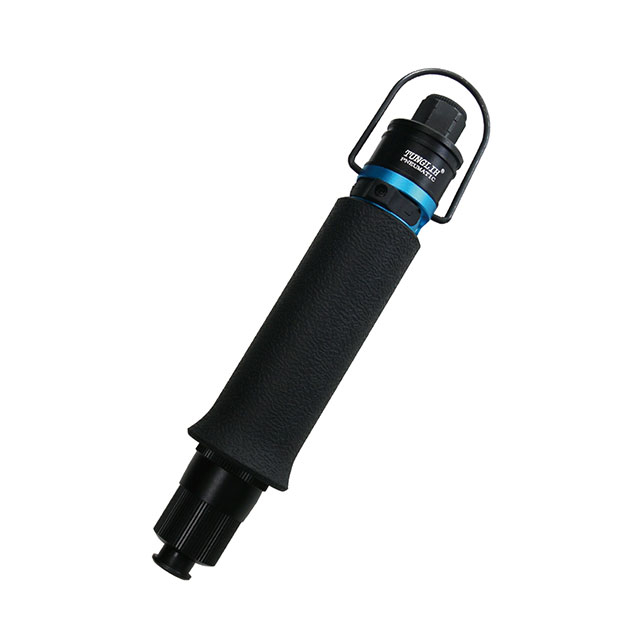
Operator comfort impacts accuracy and productivity. Pneumatic screwdrivers typically come in two main shapes:
Inline models: These tools align with the operator’s forearm, reducing wrist strain. They are ideal for fasteners oriented vertically or in tight spaces.
Pistol grip models: These offer a natural hand position for horizontal fasteners and can reduce arm fatigue during repetitive tasks.
Selecting the right shape depends on the workpiece orientation and assembly environment. Ergonomic design features like balanced weight, vibration dampening, and comfortable grips also enhance control and reduce operator fatigue, which helps maintain consistent torque application.
There is an inverse relationship between speed and torque in pneumatic screwdrivers. Tools designed for higher torque typically operate at lower speeds, while those with lower torque ranges spin faster.
High-speed tools: Suitable for fast assembly of metal-to-metal joints where torque requirements are moderate.
Lower-speed, higher-torque tools: Better for delicate assemblies or softer materials like plastics, where accurate torque control is critical to prevent damage.
Choosing the right balance depends on your production volume and material sensitivity. A tool spinning too fast may cause screw misalignment or stripping, while a tool too slow may reduce throughput.
Pneumatic screwdrivers feature different activation mechanisms that influence torque control and operator precision:
Push-to-start: The tool activates when downward pressure is applied to the fastener. This method offers speed but may cause wandering or misalignment.
Lever or trigger start: The operator controls torque application by pressing a lever or trigger, allowing for more precise alignment and torque control.
Combination push + lever/trigger: Requires both pressure and lever activation, providing the best control for critical assemblies.
For precision applications, lever or trigger start models are preferred as they reduce cross-threading risks and improve torque accuracy.
Achieving precise torque with a pneumatic screwdriver requires more than just setting the right torque value. Proper preparation, bit selection, handling, and maintenance all play crucial roles in ensuring consistent and accurate torque application. Let’s explore some best practices to help you optimize performance in precision assembly.
Before using a pneumatic screwdriver, clean the fastener threads and the mating surfaces thoroughly. Dirt, debris, or corrosion can cause friction variations, leading to misleading torque readings and inconsistent clamping force. Always inspect fasteners for damage or wear and replace them if necessary.
Additionally, ensure that the workpieces are properly aligned and securely held in place. Misalignment can cause uneven torque distribution and potential damage to components. Using fixtures or clamps can improve repeatability and reduce operator fatigue.
Choosing the right bit is essential for accurate torque control. Use bits that match the fastener head type and size precisely. Ill-fitting bits cause slippage or cam-out, which may result in under-torquing or damage to the fastener head.
Regularly inspect bits for wear, chipping, or deformation. Replace worn bits promptly to maintain proper engagement with fasteners. Using high-quality, hardened bits designed for your application can extend bit life and improve torque control.
Operator technique significantly affects torque accuracy. Hold the pneumatic screwdriver firmly and maintain a 90-degree angle between the bit and fastener head. This alignment ensures even torque application and reduces the risk of stripping or cross-threading.
Apply steady pressure without forcing the tool. Let the pneumatic screwdriver’s torque control mechanism do the work. Avoid sudden jerks or twisting motions that can cause torque spikes or inconsistent fastening.
For inline pneumatic screwdriver torque tools, supporting the tool with both hands or using a tool balancer can reduce operator fatigue and improve control during repetitive tasks.
Routine inspection and maintenance preserve torque accuracy and prolong tool life. Before each use, check for loose parts, damaged components, or air leaks. Clean the tool regularly to prevent dust and debris from affecting internal mechanisms.
Follow manufacturer recommendations for lubrication and servicing intervals. Regular pneumatic torque screwdriver calibration is critical to maintain precision. Keep records of maintenance and calibration activities to ensure compliance with quality standards.
Maintaining and calibrating your pneumatic screwdriver is essential for ensuring precision torque control in assembly tasks. Proper upkeep preserves torque accuracy, extends tool life, and prevents costly errors in your production line.
Begin every shift with a quick inspection:
Check for Loose Hardware: Tighten any screws or fittings that may have loosened.
Inspect Moving Parts: Look for misalignment, binding, or unusual wear.
Examine for Cracks or Damage: Replace any cracked or broken parts immediately.
Air Leaks: Listen for hissing sounds indicating leaks in hoses or fittings.
Bit Condition: Ensure the bit fits snugly and shows no signs of wear or deformation.
After use, always:
Set Torque to Lowest Setting: Pull down the adjusting ring and turn to the lowest torque to relieve spring tension.
Clean the Tool: Wipe with a dry cloth; avoid liquids to prevent internal damage.
Store Properly: Keep the tool in a dry, clean case away from dust and moisture.
Calibration maintains your pneumatic screwdriver torque specifications within the desired range. Follow these guidelines:
Frequency: Calibrate at least every six months or after any drop or repair.
Tools Needed: Use a certified torque tester designed for pneumatic torque screwdriver calibration.
Procedure:
Set the tool to a specific torque value.
Test the output torque with the torque analyzer.
Adjust the internal settings if the torque deviates beyond acceptable limits.
Repeat until the output matches the target torque consistently.
Document each calibration session to track tool performance over time and comply with quality standards.
Deciding between professional servicing and in-house maintenance depends on your facility’s capabilities:
Professional Servicing: Recommended for complex repairs and precise calibration. Technicians have specialized equipment and expertise to maintain air torque screwdriver precision.
In-House Maintenance: Suitable for routine inspections, cleaning, and minor adjustments if staff are properly trained and equipped with calibration tools.
Regular professional calibration complements in-house maintenance, ensuring your pneumatic screwdriver torque adjustment stays accurate.
Proper storage and handling protect your tool’s internal components and torque accuracy:
Use Protective Cases: Store the screwdriver in its case to prevent dust, moisture, and impact damage.
Avoid Dropping: Mechanical shocks can misalign internal clutches or damage springs.
Control Air Supply Quality: Use clean, dry compressed air at recommended pressure to avoid contamination and inconsistent torque output.
Temperature Control: Store and operate the tool within manufacturer-recommended temperature ranges to maintain air pressure stability and component integrity.
Incorrect torque application with a pneumatic screwdriver can lead to various assembly issues. Common signs include:
Loose fasteners: Fasteners that do not hold components firmly indicate under-torquing.
Stripped or damaged fastener heads: Over-torquing or using the wrong bit size often causes this.
Component deformation or cracking: Excessive torque can damage delicate parts.
Tool clicking too early or too late: This suggests torque settings are off or the clutch is malfunctioning.
Inconsistent torque results: Variability in torque output during repetitive fastening signals calibration or air pressure problems.
Detecting these signs early helps prevent assembly defects and costly rework.
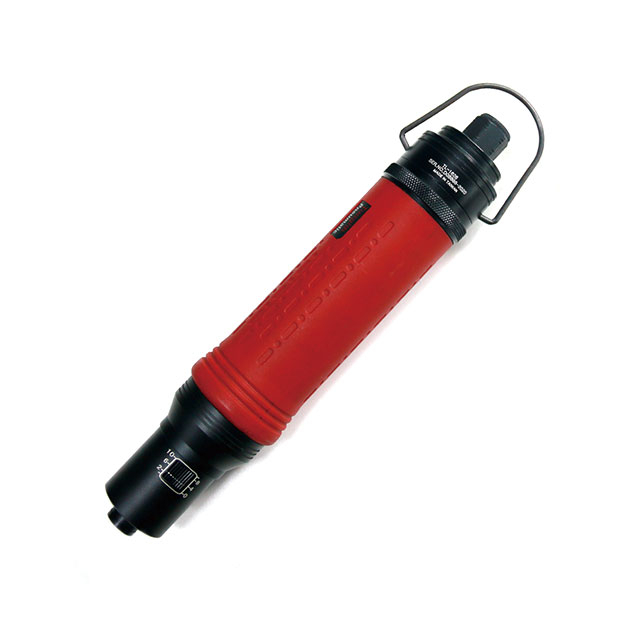
Torque inconsistencies often stem from a few key issues:
Air pressure fluctuations: Ensure the compressed air supply is stable and within manufacturer’s recommended PSI. Use regulators and filters to maintain clean, consistent air pressure.
Worn clutch or springs: Internal clutch components wear over time, reducing torque accuracy. Regular inspection and replacement are necessary.
Incorrect torque adjustment: Double-check torque settings using a pneumatic screwdriver torque guide or tester. Adjust carefully and lock settings firmly.
Bit wear or improper fit: Replace worn bits and always use the correct bit type and size for your fasteners.
Operator technique: Train operators to maintain steady pressure and correct tool angle during use.
Addressing these factors improves air screwdriver torque control and repeatability.
Pneumatic screwdrivers endure mechanical stress that can cause wear or failure:
Clutch wear: The clutch mechanism is critical for torque control. Signs of wear include slipping, failure to shut off at set torque, or unusual noises.
Spring fatigue: Torque springs lose tension over time, affecting torque output.
Air motor issues: Reduced power or erratic operation may indicate motor problems or air leaks.
Loose or damaged parts: Regularly inspect screws, bearings, and housing for damage or looseness.
Routine maintenance, cleaning, and timely replacement of worn parts preserve torque accuracy and tool reliability.
Regular calibration is essential to maintain pneumatic screwdriver torque specifications. Replace or recalibrate your tool if you notice:
Persistent torque inconsistencies despite adjustments.
Visible damage or wear to clutch components or springs.
Failure to achieve target torque values during testing.
The tool has been dropped or subjected to mechanical shock.
Calibration is overdue (typically every six months or per manufacturer guidelines).
Professional servicing ensures your pneumatic torque screwdriver calibration meets precision standards, maintaining quality and safety in assembly.
Tip: Regularly monitor torque consistency and perform pneumatic torque screwdriver calibration every six months or after any tool impact to avoid costly assembly errors and maintain precision.
Maximizing precision with correct pneumatic screwdriver torque settings ensures consistent, accurate fastening. Proper torque control improves assembly quality and safety by preventing damage and loose fasteners. Regular calibration and maintenance keep tools performing reliably and extend their lifespan. Selecting the right screwdriver with appropriate torque range and ergonomic design enhances operator comfort and accuracy. For precision applications, Dongli offers advanced pneumatic screwdrivers that deliver dependable torque control and durability, supporting high-quality production and efficiency. Trust Dongli for precise, reliable fastening solutions.
A: Pneumatic screwdriver torque settings ensure accurate clamping force, preventing over- or under-tightening in precision assemblies. Proper air torque screwdriver precision improves product quality and reduces rework.
A: Adjust the torque by unlocking the adjusting ring, setting the desired torque per the pneumatic screwdriver torque guide, locking the ring, and verifying with a torque tester. Regular calibration maintains accuracy.
A: Calibration ensures the tool delivers torque within specified ranges, maintaining air screwdriver torque control and repeatability, crucial for precision applications. It should be done every six months or after tool impacts.
A: Stable air pressure is vital; fluctuations can cause inconsistent torque output. Using regulated compressed air screwdriver torque prevents variability and maintains precision.
A: Check air pressure stability, inspect clutch and springs for wear, verify torque adjustment settings, and ensure correct bit fit and condition to resolve torque inconsistencies.