T: +86-13302905061
E: sales@dongli2006.com
E: sales@dongli2006.com
Building 101, No.5 Rixing Street, Pingdong Community, Pingdi Street, Longgang District, Shenzhen, Guangdong, China.
Views: 0 Author: Site Editor Publish Time: 2026-07-31 Origin: Site


Fastening tool selection on an assembly line carries compounding operational impacts that extend far beyond the initial installation. High rework rates, operator fatigue, and hidden energy consumption drain facility resources rapidly. Plant managers constantly face the tension between requiring high torque repeatability and managing facility infrastructure constraints alongside aggressive production volume demands. Evaluating Pneumatic vs Electric Screwdrivers requires looking beyond the surface to understand specific joint requirements, operational environments, and modern data traceability needs. Choosing the incorrect fastening technology leads to stripped screws, inconsistent clamping force, and significant bottlenecks during quality control inspections. Assembly environments demand tools that align perfectly with the physical realities of the product being built. Understanding the mechanical and electronic differences between these two primary systems ensures that production lines operate at peak efficiency while maintaining strict quality standards.
Precision vs. Power: Electric screwdrivers dominate in torque repeatability, speed profiling, and data logging, while pneumatic tools offer superior power-to-weight ratios for heavy-duty applications.
Infrastructure Dependency: Pneumatic systems require rigorous air quality management and high energy consumption via compressors; electric systems rely on consistent grid power but operate at a fraction of the energy cost.
Traceability (Industry 4.0): Electric torque screwdrivers are mandatory for assembly environments requiring strict compliance, programmable fastening profiles, and automated data logging.
Table of Contents
Understanding the engineering difference between hard joints and soft joints dictates the baseline requirements for any assembly tool. Hard joints involve fastening metal to metal, where the fastener head seats against the material and reaches final torque almost instantly. This rapid spike in resistance requires fast-acting clutches that disengage immediately to prevent over-torquing and thread damage. Soft joints, utilizing materials like plastics, rubber washers, or incorporating compressible gaskets, behave entirely differently. The material compresses during the fastening process, meaning the joint relaxes after the initial tightening. This compression demands a tool that manages joint relaxation effectively, often requiring a slower run-down speed or a multi-stage tightening sequence to ensure the clamping force stabilizes. The physical torque thresholds also dictate the internal mechanism required. Extremely high Nm applications often necessitate the raw power delivery of pneumatic systems, whereas delicate, low-torque assemblies rely on the finesse of electric motors to prevent material fracture.
Takt time and shift structures heavily influence tool selection on the factory floor. Rotational speed (RPM) management prevents cross-threading or stripping during high-throughput production runs. High-speed assembly lines require tools that maintain consistent RPM without faltering under continuous load. When cycle times are tight, the tool must engage, drive, and disengage with absolute predictability. Operators working on fast-paced lines cannot afford tools that bog down or require manual speed modulation. The chosen screwdriver must align with the rhythm of the production line, ensuring that fastening operations never become the bottleneck. For lines running 24/7, the duty cycle of the tool becomes a primary selection factor, as pushing a tool beyond its rated continuous operation limits leads to premature failure.
Ergonomics and cycle efficiency depend heavily on the physical design and start mechanism of the tool. Lever-start mechanisms suit applications where operators need precise control over engagement, allowing them to align the bit perfectly with the fastener head before applying power. This is common in horizontal fastening tasks. Push-to-start mechanisms excel in rapid, repetitive downward fastening, as the tool activates automatically when the operator applies downward pressure, eliminating a physical step from the cycle time. Inline body styles work best for vertical applications suspended above the workstation on tool balancers, whereas pistol-grip styles are ergonomically suited for horizontal fastening where the operator pushes forward into the joint. Angle-head tools are reserved for confined spaces where standard inline or pistol grips cannot physically reach the fastener.
Industries like aerospace, medical device manufacturing, and automotive assembly require strict baseline standards for quality assurance. Every fastened screw must often be recorded, verified, and integrated into Manufacturing Execution Systems (MES) platforms. Traceability ensures that if a product fails in the field, manufacturers can review the exact torque applied to every fastener during assembly. This level of compliance dictates a shift toward smart tools capable of digital communication, leaving mechanical-only systems behind in highly regulated sectors. The ability to lock out a line if a single screw fails its torque parameter is a standard requirement in modern safety-critical manufacturing.
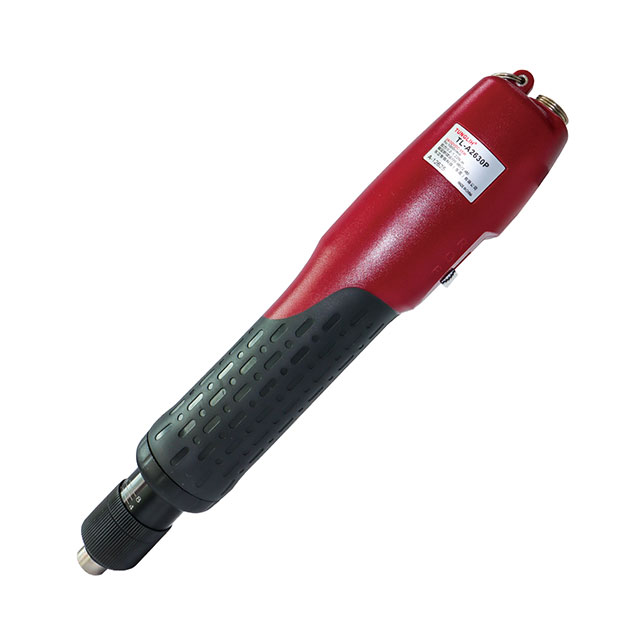
Pneumatic tools rely on a precision-machined air motor and a mechanical clutch to deliver rotational force. Compressed air enters the tool, expanding against the motor vanes to generate high-speed rotation. The performance of the tool is directly tied to the volume (CFM) and pressure (PSI) of the air supplied. Slip or cushion clutches allow the tool to ratchet once the target torque is reached, signaling to the operator that the cycle is complete. However, these clutches can continue to apply slight rotational force if the operator keeps the trigger depressed. Automatic shut-off clutches provide a higher level of precision by stopping the tool entirely the moment the mechanical clutch disengages, preventing any further force from being applied to the fastener and ensuring better repeatability across shifts.
Air tools deliver an exceptional power-to-weight ratio. They lack heavy internal copper windings, circuit boards, and magnets, making them significantly lighter and reducing operator fatigue in high-torque applications. A pneumatic tool capable of delivering 20 Nm of torque will physically weigh much less than its electric counterpart. Furthermore, pneumatic tools possess excellent thermal management capabilities; the expansion of compressed air naturally cools the internal components during operation. They cannot overheat, making them ideal for continuous, rapid-cycle operations across multiple shifts without requiring cool-down periods. Pneumatic systems also show immense durability in harsh environments, resisting dust, dampness, and volatile atmospheres where electronic components might fail or pose a dangerous spark risk. They are the standard for ATEX-rated environments like paint booths or chemical processing facilities.
Compressed air systems suffer from hidden infrastructure inefficiencies, including microscopic leaks and pressure drops across long facility runs. A drop in line pressure directly translates to a drop in torque output at the tool, leading to under-torqued fasteners. Facilities must install and maintain FRL (Filter, Regulator, Lubricator) units at every workstation to prevent premature motor wear and maintain clutch calibration. Moisture and debris in the air lines will quickly degrade the internal vanes of a pneumatic tool, causing erratic performance. Inconsistent torque delivery remains a significant risk if the main air line pressure fluctuates due to high demand in other areas of the plant. Regular audits of the air compressor system and point-of-use regulators are mandatory to keep pneumatic lines operating within specification.
Maintenance Task | Frequency | Impact on Tool Performance |
|---|---|---|
Check FRL Lubricator Oil Levels | Daily | Prevents vane wear and motor seizing. |
Drain Air Line Moisture Traps | Weekly | Stops internal rust and clutch degradation. |
Verify Dynamic Air Pressure | Monthly | Ensures consistent torque output under load. |
Mechanical Clutch Calibration | Quarterly | Corrects spring fatigue and maintains accuracy. |
Modern assembly lines utilize various electric systems tailored to specific precision requirements. Basic direct-AC screwdrivers offer simple plug-and-play functionality for non-critical joints, plugging straight into a wall outlet. Low-voltage DC brush or brushless systems provide smoother operation and better speed control via external power supplies, isolating the tool from grid voltage fluctuations. Advanced transducerized models represent the pinnacle of fastening technology. These tools measure the actual applied torque in real-time using internal strain gauges, ensuring that the theoretical torque setting matches the physical reality of the joint. Instead of relying on a mechanical spring to disengage, the transducer reads the twisting force on the drive shaft and signals the controller to cut power the millisecond the target torque is achieved.
Electric brushless motors provide superior torque accuracy and repeatability, consistently outperforming mechanical clutches in statistical capability (Cpk) metrics. Programmable fastening profiles allow manufacturing engineers to design multi-stage tightening sequences tailored to complex joints. A tool can be programmed for a slow run-down to catch the thread without cross-threading, a high-speed drive phase to reduce cycle time, a soft-start approach to the seating torque, and a slow final torque application to prevent overshoot. Data logging and connectivity facilitate seamless integration with plant-wide networks for quality control, automatic batch counting, and immediate root-cause analysis of fastening failures. If an operator misses a screw, the controller alerts the line and prevents the part from moving to the next station.
Lower-tier electric models face thermal limitations and strict duty cycle constraints, risking motor burnout during continuous heavy use on demanding joints. If an electric tool is rated for a 1-second on, 3-seconds off duty cycle, pushing it beyond that will melt the internal windings. High-torque electric models inherently weigh more due to the dense internal magnets and robust gearboxes required to generate force. Facilities must implement ergonomic mitigations like torque reaction arms or overhead tool balancers to protect operators from repetitive strain injuries and manage the increased physical weight of the equipment. Additionally, the cables connecting the tool to the controller are subject to wear and require routing management to prevent tripping hazards or cable fatigue.
Mechanical clutch variance in air tools typically ranges between ±10% to ±15%, depending on the quality of the air supply and the condition of the clutch springs. In contrast, transducerized electric tools offer precision often within ±2% to ±5%. This tight tolerance is crucial for delicate components that crack under excessive force or safety-critical joints that fail if under-torqued. When evaluating Pneumatic vs Electric Screwdrivers, the required Cpk of the joint dictates the technology. If the engineering drawing calls for a tight tolerance, mechanical air clutches simply cannot deliver the statistical reliability required.
Electric tools allow precise, digital speed configuration to match delicate or varied plastic and metal substrates. Engineers can lock these speed settings via software to prevent operator tampering. Pneumatic tools generally operate at a fixed speed based on available air pressure, offering operators limited control via the trigger valve, which introduces human error into the fastening cycle. If an operator fully depresses the trigger on a pneumatic tool during a delicate plastic assembly, the high RPM can instantly strip the threads before the clutch has time to react.
Pneumatic tools are lightweight but generate significant exhaust noise and high-frequency vibration, contributing to operator fatigue and potential hearing loss over long shifts. The cold air exhaust can also cause discomfort if directed at the operator's hands. Electric alternatives run significantly quieter and produce lower vibration profiles, creating a safer and more comfortable workstation, though they require support infrastructure to manage their heavier physical mass. Torque reaction arms are often mandatory for electric tools above 10 Nm to prevent wrist injuries.
Recalibrating pneumatic clutches for different applications requires physical effort, specialized torque testers, and production downtime. An engineer must physically adjust the tension nut on the tool. Swapping software torque profiles on an electric controller takes seconds. A single electric tool can store multiple torque programs, allowing an operator to fasten different screws on the same assembly without changing physical tools. The controller can even be integrated with a barcode scanner to automatically select the correct torque profile based on the part being assembled.
Standard pneumatic tools are entirely unsuitable for cleanrooms due to oil exhaust and particulate generation from internal motor wear. Even with specialized exhaust hoses, the risk of contamination is high. Electric tools offer a clean, plug-and-play nature ideal for controlled environments, laboratories, and electronics manufacturing where contamination leads to immediate product failure. Furthermore, electric tools only require standard grid power, whereas pneumatic tools require a massive, facility-wide network of compressors, dryers, and steel piping.
Selection Factor | Pneumatic Screwdrivers | Electric Screwdrivers | Winner / Use Case |
|---|---|---|---|
Torque Precision | Moderate (±10% to ±15%) | High to Ultra-High (±2% to ±5%) | Electric (Precision Assembly) |
Power-to-Weight | Superior (Lighter at high torque) | Moderate (Heavier motor/magnets) | Pneumatic (Heavy Industrial) |
Energy Efficiency | Low (Compressor losses) | High (Direct electric draw) | Electric (Green Initiatives) |
Data Traceability | None (Mechanical only) | Full (IoT/MES Integration) | Electric (Industry 4.0 Compliance) |
Hazardous Areas | Safe (Intrinsically safe, no spark) | Requires specialized enclosures | Pneumatic (Paint booths/Explosives) |
Specify pneumatic systems for heavy machinery assembly, explosive environments, and facilities with deeply integrated, highly optimized air infrastructure. They excel in high-torque applications above 15 Nm where tool weight becomes a critical ergonomic factor and overhead balancers are not feasible. Environments like paint booths, chemical processing plants, or grain handling facilities require the intrinsically safe nature of air tools, where the absence of electrical components eliminates spark risks. They are also suitable for rugged environments where tools are frequently dropped or exposed to heavy dust and moisture.
Select electric systems for precision electronics, medical device manufacturing, and automotive safety-critical joints. They are essential for facilities prioritizing noise reduction, energy efficiency, and strict quality control verification. If your assembly process requires recording the exact torque applied to every single fastener for compliance audits, electric transducerized systems are the only viable engineering choice. They are also the default choice for cleanroom environments and facilities looking to implement automated, robotic fastening stations where digital handshakes between the tool and the PLC are required.
The change management process involves comprehensive operator training, workstation infrastructure updates, and software integration. Facilities must plan for new ergonomic supports, such as reaction arms, to handle the heavier electric tools. IT departments must coordinate data network installations to capture the telemetry generated by the new controllers, ensuring a smooth phase-out of legacy pneumatic lines. Operators accustomed to the speed and feel of air tools will need time to adjust to the programmed multi-stage tightening sequences of electric tools, which may feel slower initially but ultimately reduce rework and scrap rates.
Define torque parameters, joint type (hard vs. soft), and necessary rotational speed (RPM) for your specific assembly.
Determine data logging, error-proofing, and regulatory compliance requirements to see if transducerized tools are mandatory.
Evaluate environmental constraints, including cleanroom standards, hazardous area classifications, and operator ergonomics.
Conduct an on-site tool audit to evaluate current fastening challenges and request a manufacturer demo to test electric programming capabilities on actual production joints.
Perform a comprehensive compressed air leak assessment before finalizing procurement to understand the true state of your pneumatic infrastructure.
A: Yes. Electric screwdrivers, particularly transducerized models, use electronic sensors to measure and control torque precisely. Pneumatic screwdrivers rely on mechanical clutches, which have a wider variance and are highly susceptible to fluctuations in facility air pressure.
A: Push-to-start tools activate when the operator applies downward pressure, making them ideal for vertical, repetitive tasks. Lever-start tools require the operator to press a lever, offering better control for horizontal applications and reducing accidental engagements during complex assemblies.
A: The lifespan heavily depends on air quality and routine maintenance. Proper use of Filter, Regulator, and Lubricator (FRL) units prevents moisture and debris from degrading the internal air motor, extending the tool's operational life significantly.
A: Electric tools require less mechanical maintenance than pneumatic tools but need regular electronic calibration. Modern brushless motors eliminate carbon brush wear, leaving calibration verification and cable inspections as the primary maintenance tasks.
A: Standard pneumatic tools exhaust air and atomized oil, making them unsuitable for cleanrooms. While specialized oil-free air tools exist, electric screwdrivers are inherently cleaner and remain the preferred choice for ISO-certified environments.
A: A transducerized electric screwdriver contains an internal strain gauge that measures the exact torque applied to the fastener in real-time. This technology ensures verifiable accuracy and feeds data directly into manufacturing quality control systems.
A: Pneumatic tools offer high raw velocity but limited speed control. Electric models provide highly controllable, variable-speed profiling, allowing operators to program slow starts and precise run-down speeds to protect delicate components from thread damage.